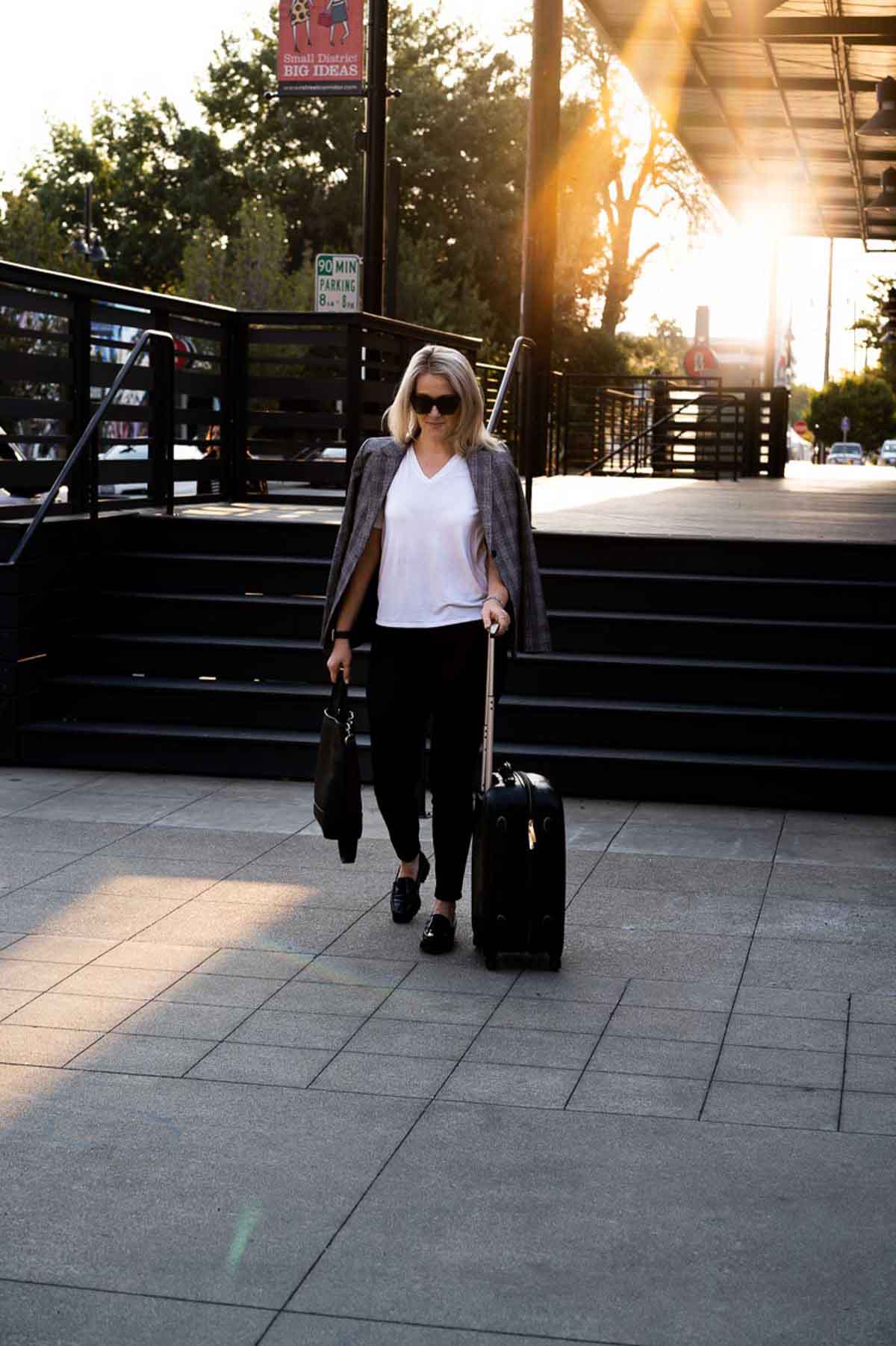

Must Have Travel Essentials for Europe



If you’re packing for a trip to Europe from the US, it’s very easy to get overwhelmed and end up overpacking. I’ve been traveling to Europe my whole life and now have packing down very well. Here are the must-have travel essentials for Europe as well as a few things you can happily leave at home.
The list below covers items you’ll want for travel days as well as the everyday items you need during your visit. This isn’t a clothes packing list as that depends on your destination, the season, and your activities. I have a few specific packing lists (linked below) if you’d like help with that. Instead, these are all the non-clothing items you’ll need to pack.

CONTENTS
Must Have Travel Essentials for Europe
Living on the west coast of the US, our travel time to Europe is quite a bit longer it is for travelers departing from the East Coast, but the number of items I take in my carry on bag isn’t any more. Travel today is also becoming increasingly easier with TV, movies, games, and even WiFi on most planes, so your carryon doesn’t need to be overloaded with entertainment.
This is great as it helps to limit what you need to pack with you on the plane—all of which will need to be carried around with you during your visit to Europe. Much of Europe has cobblestone sidewalks, lots of steps and staircases, and a fair number of hills. None of these realities are conducive to heavy or clunky luggage.
Beyond that, there are simply some items you don’t need to bring with you as you’ll readily find them at your destination or you’ll be able to do without for the duration of your trip. You can read more into must have travel essentials for women to help you get started! There’s a free printable even.

What is Europe Like for Travelers
International travel is a wonderful chance to experience new foods, new cultures, and new practices. You can immerse yourself in varying languages, the diversity of people, and the rich and varied history of every destination in Europe.
Most importantly, Europe is made up of many countries, each with their own languages, ethoses, and histories. Doing a little research on your destination (nothing too serious) is important to being a considerate visitor and to having a better trip!
For example, tipping isn’t as customary in many European countries as it is in the US. You might leave a few coins or round up the bill, depending on the country.
Speaking of eating out, you’ll need to request the bill at restaurants. Your server generally won’t bring the bill until you ask for it.
In countries like Italy and Spain, dinner times don’t start before 7, so you’ll need to adjust your times. Traveling with a young kid, we adapted with dinners at 7 or 730 and a slightly later bedtime for him (which made our trip back home that much easier for him actually).
In smaller towns, you’re very likely to experience more closures (e.g. churches and shops might be closed on Sundays or Mondays). Additionally, you’re likely to find fewer English speakers in smaller towns. Be patient and kind—you’re the visitor. And our phones are a great help in translation these days, so use your phone to help with any language barriers.
Generally speaking, children are very much a part of everyday life in Europe. Feel free to take your kids to dinner or enjoy happy hour together in a plaza. Note that most kids behave in a way that fits in with grownups—they aren’t being loud, rude, or dismissive.
I find countries in Europe to be very easy for travel—with and without children.

What To Bring When Traveling To Europe—On the Plane
You can see my complete list of what to pack in your carry on for international flights. That list includes items like ebooks, snacks, eye masks, and the like to make the travel day itself easier. No matter how long the flight, there are a few items I always have in my carry on bag for entertainment and necessity.
Documents & Money
When traveling, it’s always best to keep your documents and money on your person. Besides needing your passport for your travel day, you don’t want to lose your luggage and be stuck without important documents or money.
I use this travel wallet to hold our passports, luggage claim tags during the flight, travel plans I’ve printed, and cash I’m not currently using (e.g. US dollars are stored there while we’re abroad).
I also recommend downsizing to a travel wallet. You need essentials like your ID/drivers license, debit card, credit card, and cash. Most of the other items in your wallet are unnecessary when traveling abroad, however, so leave your Costco card, any stamp cards, the cute picture of your kid, and the receipts at home. Here’s a list of what to put in your travel wallet.
It’s a great idea to keep money in a few places, whether that’s two different credit cards or a card and cash. In the past, my husband has paid for everything, but I have the backup cash in my wallet. Now we each have our own credit cards and split the cash between us. Many people use contactless payments throughout Europe, but some smaller businesses or markets may still prefer or require cash.
Charging Cables & Travel Adapter
For your travel day and for your trip, you’ll need your charging cables and a universal travel adapter. Europe uses several different plug types, so check the requirements for the countries you’ll be visiting. I like adapters that can change between plug styles.
I find I use up my phone battery much faster while I’m traveling as I’m usually using the maps app and searching for places to eat and visit. Having a portable charging bank is handy (really a must-have travel essential now).
This one is a great portable charger for charging multiple devices simultaneously—provided you have the necessary cords. This cordless power bank connects to your phone for magsafe charging—no cords required (use code ZEROWASTE25 for 25% off).
These are great items to have in your carry on bag for charging on the plane, at the airport, or at your destination if your luggage doesn’t arrive with you.
Prescription Medications & Vitamins
Your travel day will likely at least one time when you’d normally take morning or evening medications. Having lost my luggage for seven days one time, I now always have a few days or even all of my vitamins and prescriptions on me. They don’t take up much room and they’re one of the most difficult things to replace.
Undergarments
Be sure to pack an extra pair of underwear and socks in your carry on. The one time I forgot to do this is when we lost our luggage for a week. It’s like tempting fate for me now.
With this one spare change of undergarments, you can regain sanity upon arrival until your luggage arrives or you’re able to purchase more.
Toiletry Bag
While sleep isn’t great on a long haul flight, I try to maintain my sleeping routine as much as possible to help get the most sleep. This includes my toothbrushing routine, a simple face wipe and moisturizer, and maybe mascara and tinted SPF for arrival. This toiletry bag is also my insurance in case we don’t have luggage on arrival.
See my complete toiletry bag packing list as well as my picks for the best travel sized containers.
Other Necessities
There are a few other things I always pack with me on the plane. I don’t know if they’re must have travel essentials for everyone, but they are for me. This is namely a small, refillable water bottle and my scarf. I drink a lot of water and work hard to stay as hydrated as possible during travel, so having a bottle to refill is most convenient for me. And my scarf is a great light layer if the plane is cold (and it’s handy on arrival).
What To Bring When Traveling To Europe—For Your Trip
For your trip to Europe, there are a few must have essentials to be sure. And know that nearly everything you could need can be purchased there. In general, however, packing light and packing smart is the best course of action. You’ll fit in just fine and have a lighter load (physically and mentally) to carry around.
Light Layers
I’m generally a fan of layering light layers, no matter my destination. If you’ve followed my blog long enough, you’ve likely noticed that my cool weather travel has changed from a large puffy coat to an unlined raincoat over warmer (not thick) sweaters. It’s just more efficient, easier, and just as warm.
Layers are particularly good for travel as you’re likely to be away from your hotel or flat for much of the day, so your light layers can be there for whatever you need. If you travel in spring or fall, a lightweight rain jacket is also really useful.
Many churches and places of worship also require shoulders to be covered, so if you’re traveling in warmer weather, it’s great to have something to just throw over your shoulders as needed.
Walking Shoes
Europe is full of cities where walking is the primary mode of transportation and you will walk. Many of the streets are centuries or even millennia-old, however, so they may not be flat. Most shoes in Europe are comfortable walking shoes. This might be tennis shoes, boots, or strapped sandals, but they’re all comfortable for the thousands of steps in your day.
We travel to Europe most often in spring and fall, so I’m usually in short boots and/or tennis shoes. For summer, you’ll want a sturdy pair of sandals and tennis shoes. Flip flops are not something you’ll see in Europe. For winter, you’ll want a comfortable pair of waterproof boots.
PRO TIP: Shoes should be worn in on your arrival. Don’t plan to wear in your shoes with days of so much walking.
Secure, Sturdy, Packable Bag
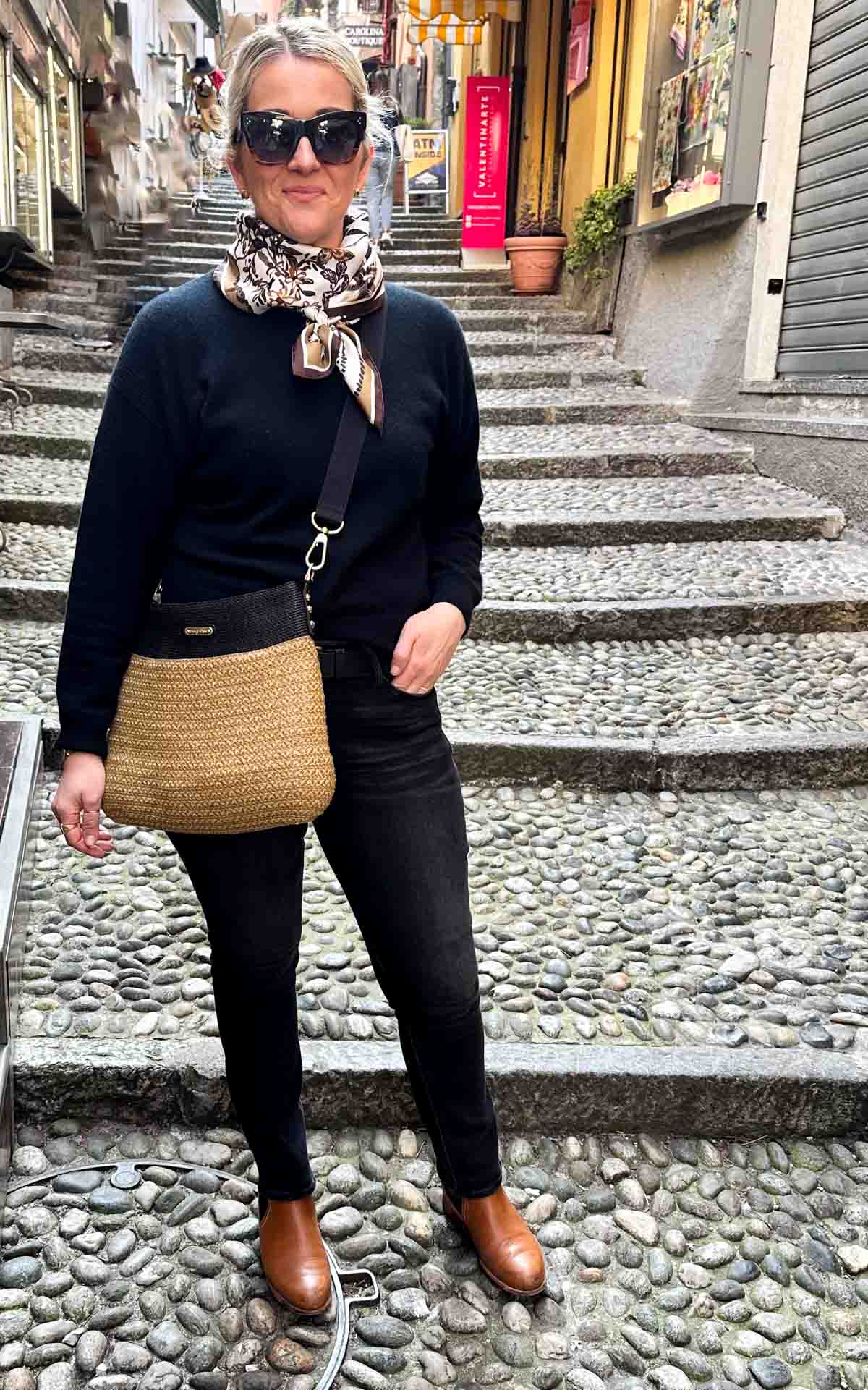
Traveling with a purse is essential for me. I have one bag with which I’ve been traveling to Europe for over 10 years. The purse is a crossbody with a thick, strong strap, zippers across the top to completely close it, and a sturdy structure. It also has a side interior pocket (where I put my wallet) and squishes flat into my suitcase.
I’m not normally a crossbody bag person, but having the strap across your body makes the bag harder to remove. When traveling in big cities, especially to tourist hotspots, being mindful of your belongings is a reality.
The one I have is by Eric Javits but the styles are no longer the same. Here are a few I’ve seen that look like great alternatives:

How to Build a Packing List For Europe
As I’ve learned how to pack lightly (and still pack everything I need), creating a list has been the most helpful. This isn’t just a list of the type of items (e.g. shirts, pants), it’s a list with a specific number of items.
It’s easy to overpack when you just start pulling out items from your closet, so having that specific number of items on your checklist becomes helpful.
The 3 most important considerations are: what you’ll be doing on your trip, what the weather will be, and what your laundry facilities will be.
When we travel, it’s usually sightseeing, day trips, and casual meals. All of this allows for versatile clothing that easily goes day to night. Everything can be worn together—a wonderful mix-and-match setup. We also plan to do laundry whether it’s a washing machine in a rented flat or sending out clothes for cleaning at a hotel.
In a hotel, I can wash my son’s and my undergarments in a hotel sink, but shirts and sweaters are sent out. My husband prefers to send all his undergarments and clothes to the laundry—it’s part of our plan.
I recently purchased packing cubes to help keep our suitcases organized between clean and dirty clothes as well. Use code LUCI15 for 15% off.
Want to make packing even easier? Download my free Travel Essentials Checklist for Women. It’s a simple, printable checklist of the travel essentials worth bringing along so you can feel prepared without overpacking. Print it before your next trip and check things off as you get ready to go!
Here are a few European packing lists I’ve created. You can use the numbers of items to help you create your packing list and must have essentials for Europe!
Traveling to Europe doesn’t require a suitcase full of special gear or things you might only use once. After years of visiting, I’ve learned that packing well is really about bringing a few practical essentials that make your days easier and leaving the rest at home. The less you have to carry around, the more you can focus on enjoying everything Europe has to offer!