

How To Make Balsamic Glaze

Growing up, I didn’t understand why anybody would like balsamic vinegar. Now that I’m a grown up (most of the time anyway), I LOVE balsamic vinegar and, especially, balsamic glazes. They’re wonderfully tangy, sweet, and smooth all at the same time. And they are the perfect finish to dishes that are sweet or earthy. Here’s how to make balsamic glaze!
While a homemade balsamic glaze recipe sounds fancy, it’s actually pretty simple. Once you do it, you’ll have a new trick in your back pocket and be looking for ways to use it! It uses just a few pantry staples (two) and takes just a bit of time.
This is also true for homemade salad dressings, which are even easier to make and always get compliments from guests (no matter how simple they are). Start with something like this balsamic salad dressing or this white balsamic dressing recipe!
CONTENTS
How To Make Balsamic Glaze
While balsamic vinegar is thin and very tangy, a balsamic glaze – also called a balsamic reduction – is actually a concentrated sauce of sorts. It’s still tangy but slight sweeter. It’s a great addition to fruits, veggies, meats, and cheeses! You can even personalize your balsamic glazes depending on how you want to use them by adding in various herbs during the reduction process.
What is a Balsamic Glaze
A balsamic glaze is the reduction (basically meaning less water) of balsamic vinegar. Many recipes add honey or sugar to help with thickening and to enhance the sweet flavor profile that balances out the vinegar tang. When you cook it down (simply evaporating water content), it creates a thick, syrupy consistency.
There are lots of balsamic vinegars out there. I encourage you to opt for the nicer ones – they’ll be less tangy. In the grocery store, you’re usually talking $10-$15 rather than less than $5, so it’s not a big splurge. And a little vinegar goes a long way, so it’s a worthy investment.
What does Balsamic Glaze Taste Like
A balsamic glaze has that tang of balsamic vinegar but the addition of a bit of sugar gives it a lovely sweetness that balances the balsamic glaze.
I will also note that because a balsamic glaze is thicker than a vinegar, it’s easier to control how much is drizzled or added to any dish. Unlike vinegar, you won’t be just accidentally dousing any dishes!
Variations & Flavor Add-Ins
The fun part, once you get the hang of making your own, is that you can add in other flavors to suit your needs and tastes.
Herbs
Try adding a sprig of rosemary or thyme while youre simmering the vinegar. Remove it before cooling.
Garlic
Add a smashed clove to the pot while simmering. You may need to strain the glaze before cooling if the clove breaks apart.
Citrus
Add a piece of orange or lemon peel to add that fresh, brightness to your glaze.
Sugar Swaps
This recipe calls for sugar, but you can use other forms of sugars and sweeteners too. Try honey or maple syrup for a softer sweetness. If you use honey, remove the glaze slightly earlier as the honey will also thicken as it cools.
What Does Balsamic Glaze Go With
- caprese salad (mozzarella, basil, and tomatoes)
- roasted vegetables
- fruit
- burrata cheese
- chicken or pork dishes
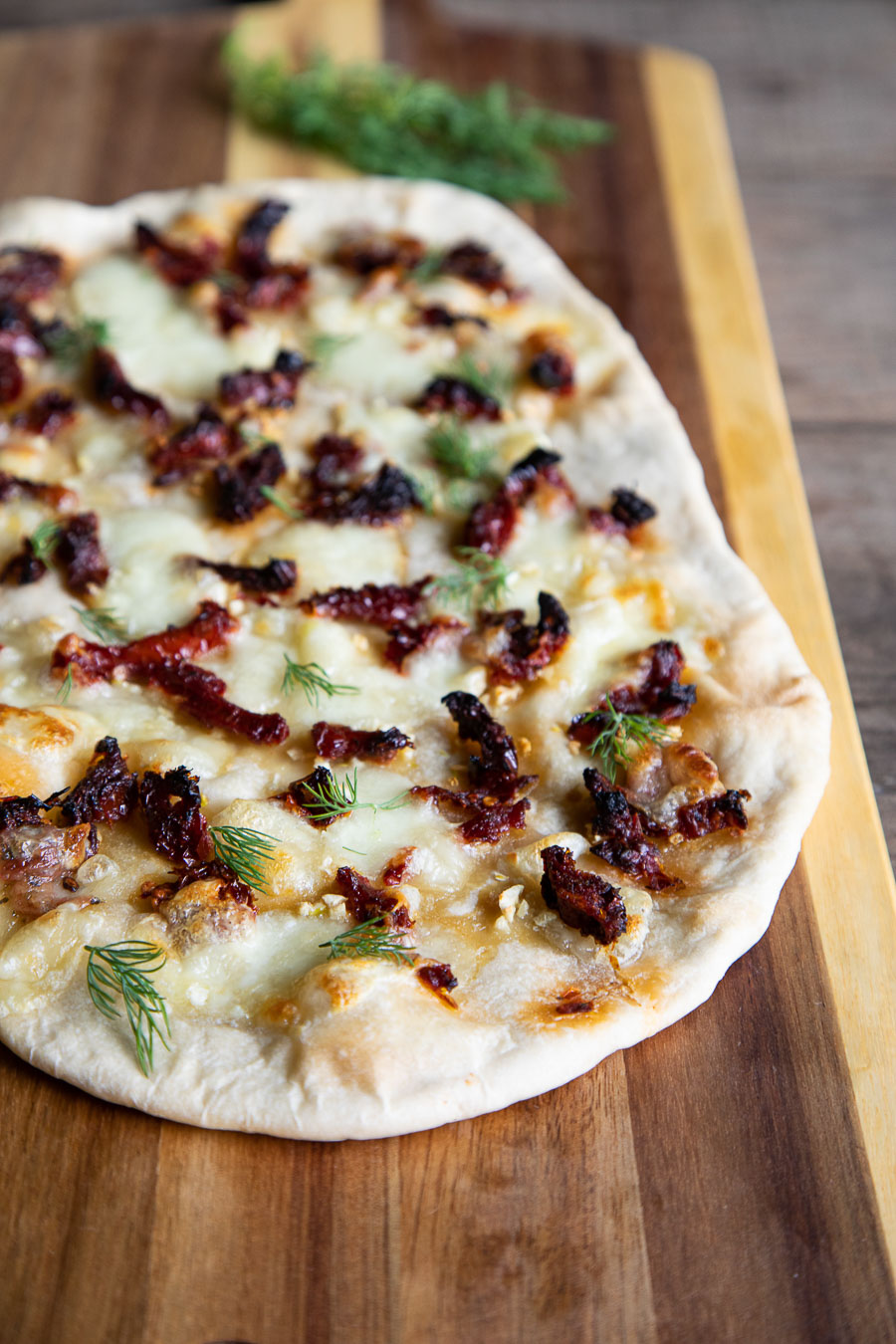
- pizza
How to make a Balsamic Glaze
Ingredients
- balsamic vinegar
- sugar
Instructions
STEP 1 – Combine ingredients in small pot over medium-high heat. Bring to a low boil. (You can also just start at medium heat and heat to a simmer, it just takes a little longer).
STEP 2 – Lower heat. Stir ingredients to combine. Stir occasionally as it simmers.
STEP 3 – Reduce to half and remove from heat. Let cool.
Tips for Making the Best Balsamic Glaze
- Keep the simmer gentle. A rapid boil can scorch the sugars and make the glaze bitter.
- Trust the cooling process. The balsamic glaze will thicken as it cools, so keep that in mind when you pull it off the heat.
- Stir occasionally, not constantly. This helps prevent sticking without interrupting the reduction. And you’ll be happier (just don’t forget about it)!
Mistakes to Avoid
Because the recipe is so simple, it’s easy to make these mistakes.
- Using very low-quality vinegar. Since there are only two ingredients, the vinegar really matters here.
- Walking away too long. Once it starts reducing, things move quickly.
- Over-reducing. If it turns taffy-like in the pan, it’ll harden too much as it cools. If this happens, not to fret. Add a splash of warm water and gently reheat and you should be just fine.
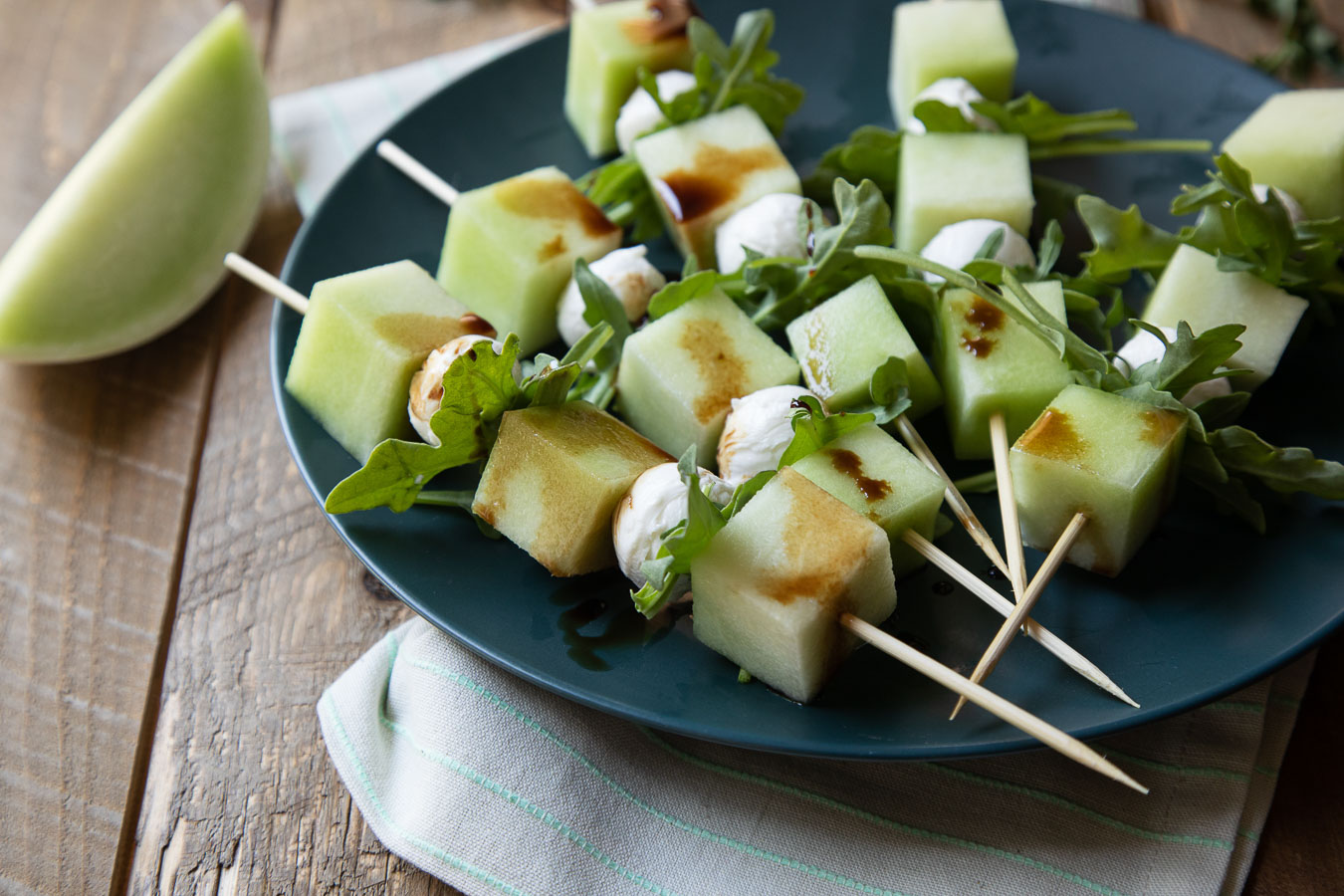
How to use Balsamic Glaze
A simple balsamic glaze is such a seemingly fancy finishing touch to any dish; the world is really your oyster. Here are our favorite ways to use a balsamic glaze:
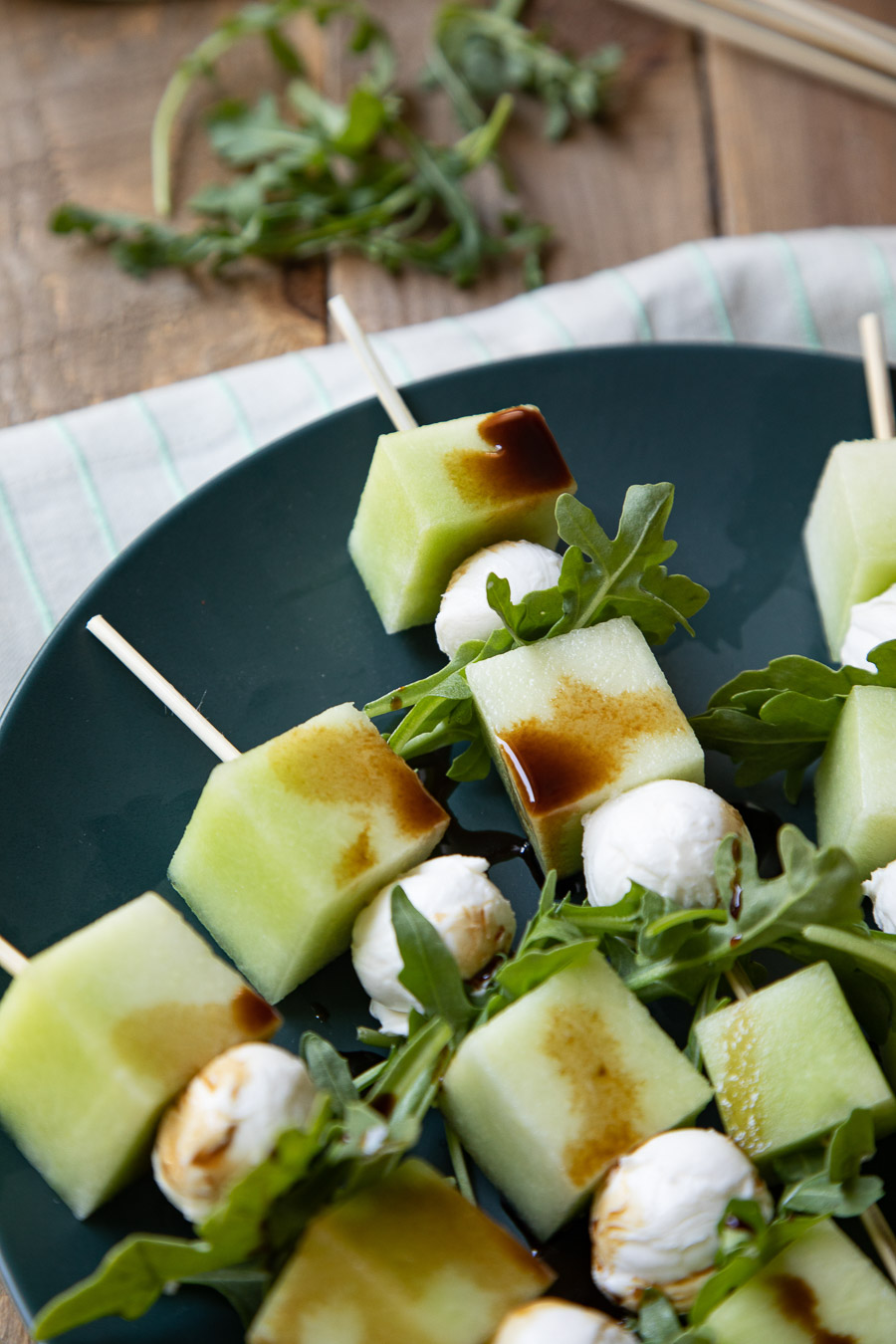
- Drizzle it over fruit and cheese for an appetizer. I love doing something simple like this honeydew melon appetizer recipe.
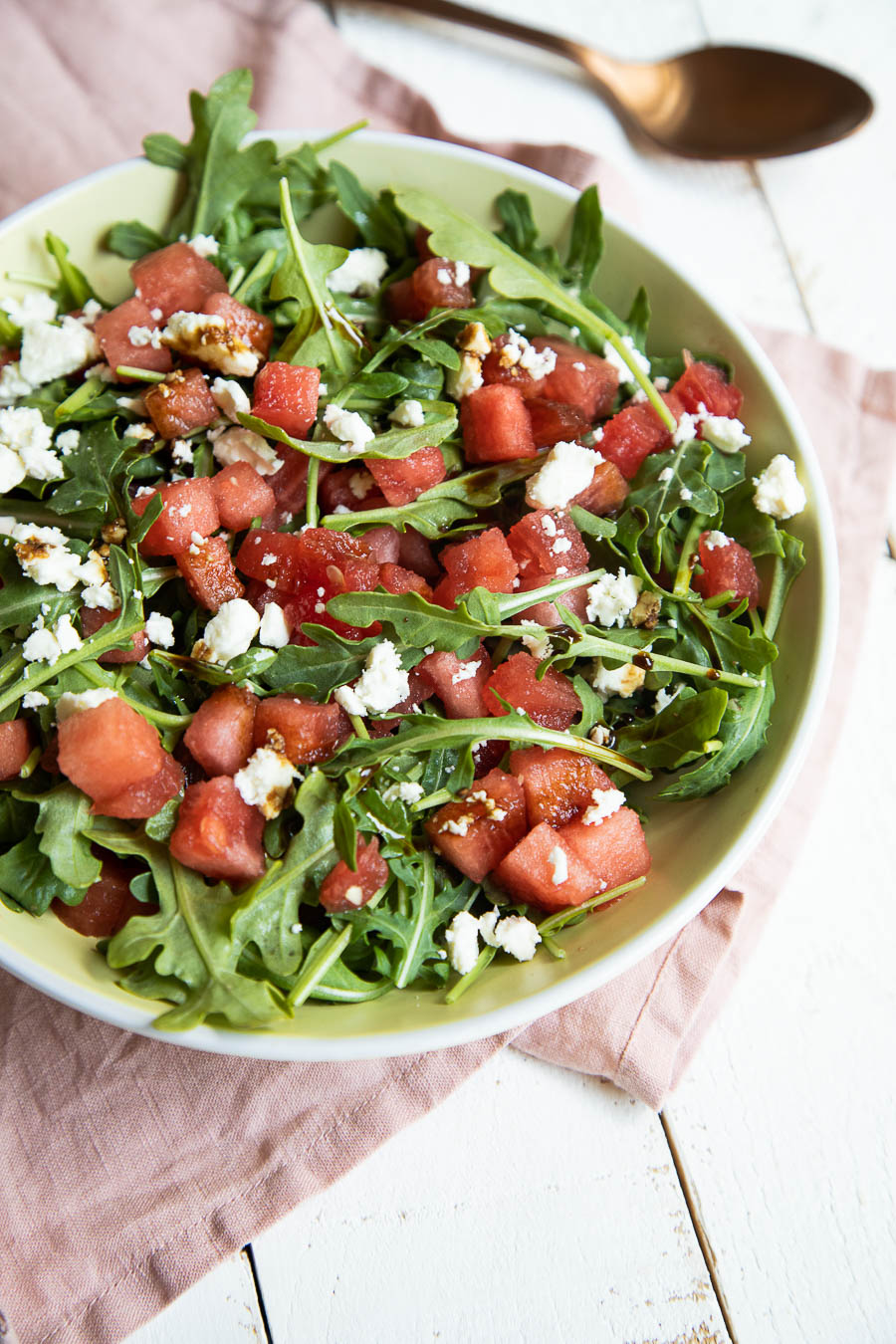
- Finish a salad with it. It’s the last ingredient in my watermelon arugula salad in summer. So, so good!
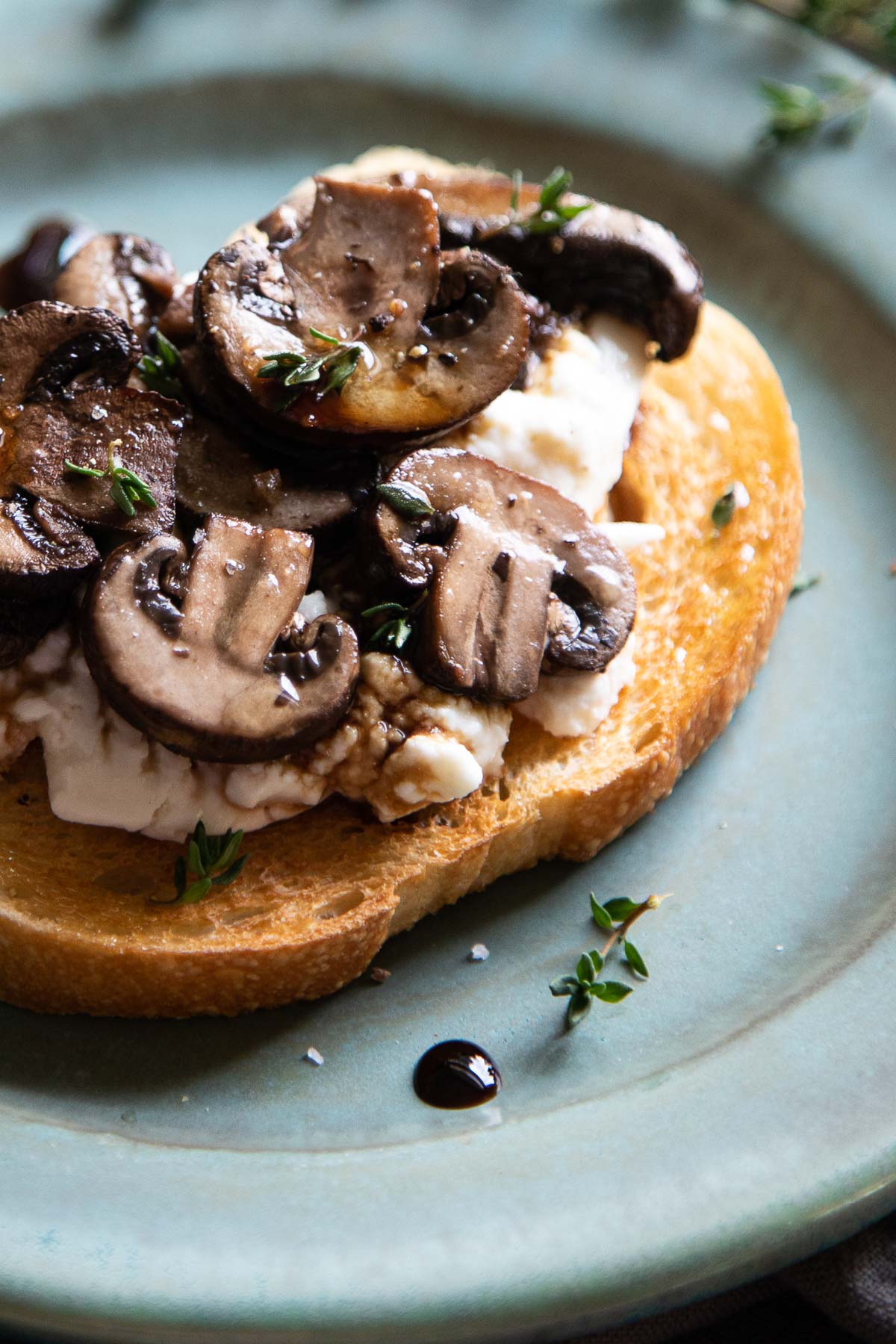
- Drizzle it over roasted veggies. Great to do this with something like a goat cheese topping. We also LOVE this burrata toast with roasted mushrooms and a drizzle of balsamic glaze. The tang and sweetness of the glaze are perfect with the earthy mushrooms.
- Drizzle it on Chicken. Even a fancy finish to these Parmesan Chicken Roll Ups
- Add it as a dip to a meat and cheese offering. A little dish of balsamic glaze on this fall charcuterie board would be heavenly!
How to Store Balsamic Glaze
Balsamic glazes store easily. Let it cool completely and pour it into a airtight container. I have a number of jars like these for homemade sauces and syrups. Then just store it in the refrigerator for up to a month. It may seem thicker once it’s chilled, but it will ‘soften’ as it comes to room temperature to use!
HOW TO MAKE A BALSAMIC GLAZE
Ingredients
- 2 cups balsamic vinegar
- 2 tablespoons sugar
Instructions
- Pour the vinegar into a small saucepan and bring to a boil over medium-high heat.
- Reduce heat to medium or medium-low to maintain a simmer. Stir occasionally, until the vinegar thickens, coats the back of a spoon, and is reduced to about 1 cup – 20 to 25 minutes. I find the wider the pan, the faster this can happen.
- Cool for at least 1 minutes before using. Store in airtight container in refrigerator.
Notes
Made this recipe?
I’d love to hear how it turned out. Leave a comment and rating below.
Instagram: Tag me @lucismorsels Save This Recipe to Pinterest

This worked exactly as written, thanks!