

How to Dry Fresh Herbs
Have you ever wondered how to dry basil and other fresh herbs at home? I used to think it was a complicated process, but it’s not – it’s very easy. Here is a step-by-step guide to help you start drying your own fresh herbs.
I’d never tried drying herbs until a few summers ago when a neighbor offered me some of their overabundant oregano harvest. I’d actually never used fresh oregano at that point, but we do use quite a bit of dried oregano, so I asked if I could easily dry it for that purpose. They said yes and offered to tie up a bunch for me to hang and dry at home.
We ended up with a huge bundle (maybe not the right measurement—but a lot regardless!), and I watched it wilt and slowly dry. Not long after, I had a few leftover basil stems from a package I bought at the market and tried the same idea. It worked perfectly, though I quickly learned just how much fresh herbs shrink once they’re dried! Now I’m hooked and try to grow and dry as many herbs as I can.
Drying herbs is one of the easiest ways to reduce food waste, save money, and preserve the flavors of your garden or even leftover grocery store herbs. If you’re looking for an easy way to air dry herbs without a dehydrator, you’re in the right place. This simple method requires no special equipment and gives you flavorful dried herbs to use year-round.
CONTENTS
How to Dry Fresh Herbs
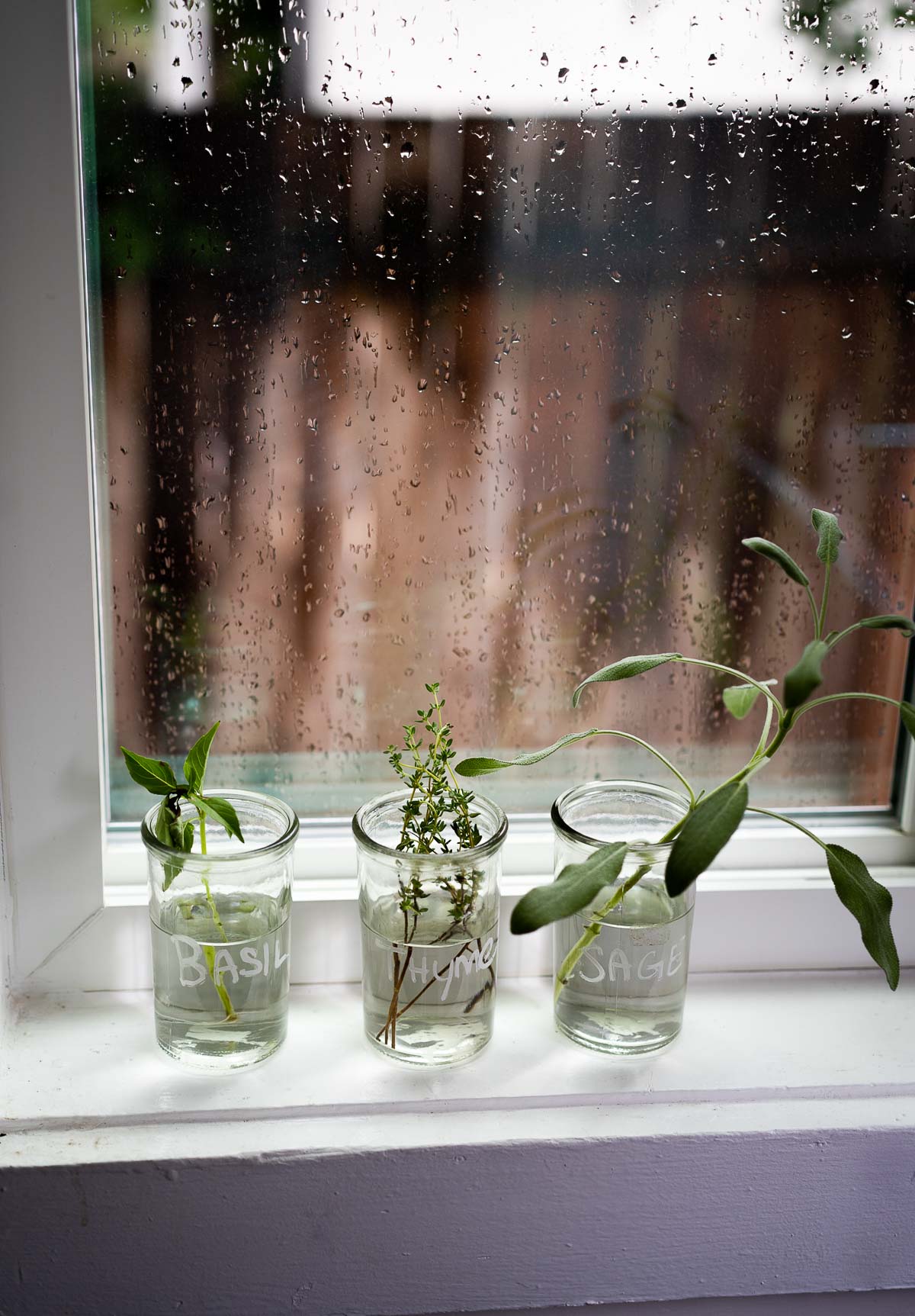
There really isn’t a recipe for how to dry fresh herbs – it’s just so straightforward, but until you’ve done it – it can seem complicated. So, here’s your step-by-step guide, so you can dry fresh herbs with ease. Remember that whether you have one stem or 100 stems, the process is the same, so you start whenever you’re ready!
Step 1: Wash and Dry the Herbs
First you want to rinse your herbs to remove any dirt, bugs, and other sorts of life. I also like to remove any damaged leaves or even very small leaves as they become more work than they’re worth when crumbling dried herbs.
Then you want to dry them completely. Spread the herbs in a single layer on a clean kitchen towel so air can circulate around every stem while they dry. Let them dry for at least a few hours, but they can certainly sit overnight – whatever is easy. Let them dry completely before hanging.
Step 2: Tie Herbs into Small Bundles
Then you want to secure the stems in a bunch. If I have a lot to dry, I usually divide them into groups where the stems are about 1″ across. You can certainly do larger bunches, but they just might take a little longer since each stem won’t get as much airflow.
Step 3: Hang Herbs to Air Dry
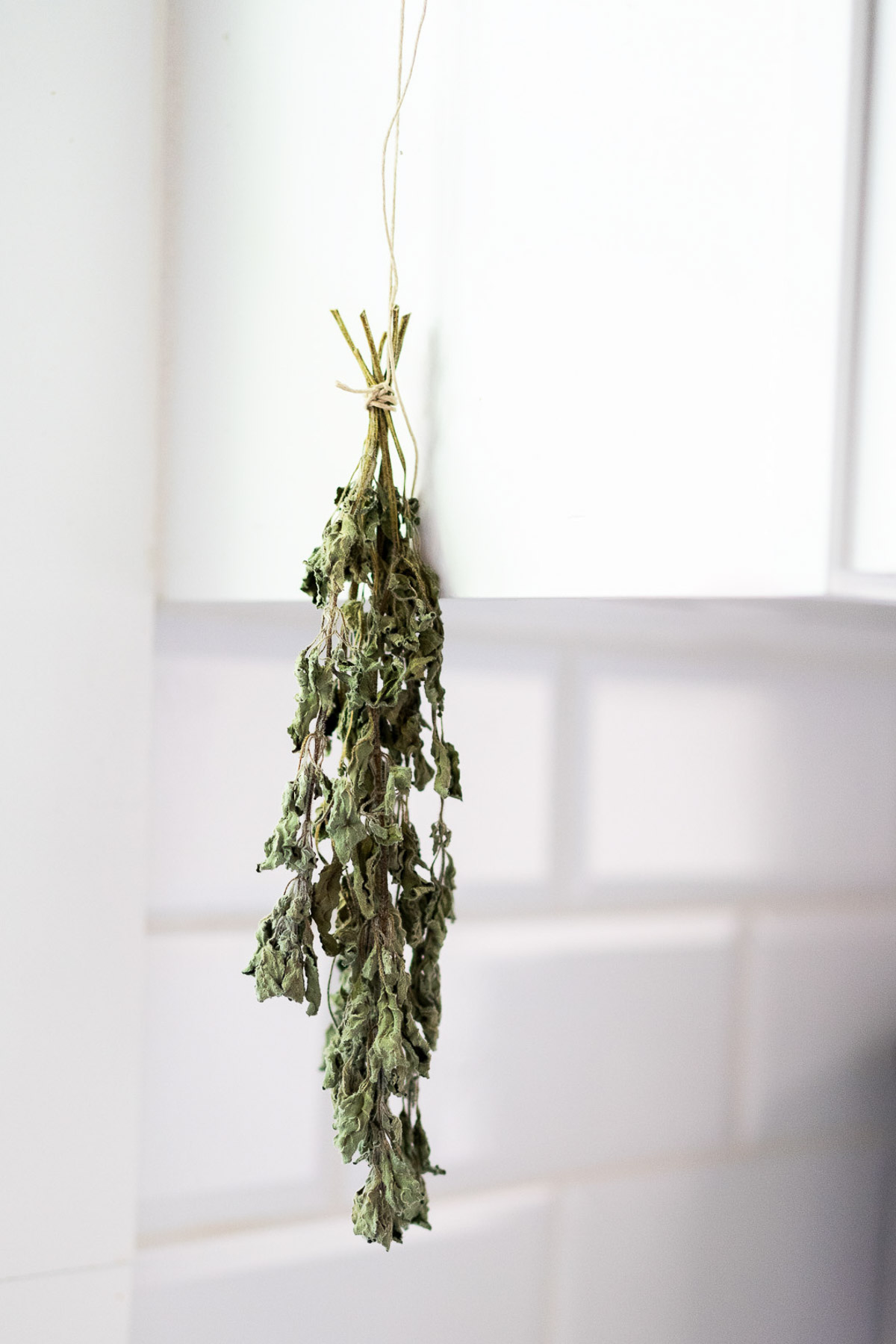
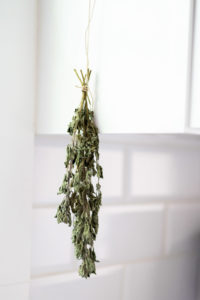
How long it takes will depend on the type of herb, the size of your bundles, and the humidity in your home. Hang your herb bunches in a cool, dark, well-ventilated area. I keep mine in our laundry room, which has a door and a window.
If you only have one hook you want to use, I’d recommend making the length of string/twine various lengths for each bunch. Instead of a big hunk of herbs drying with little ventilation, the bunches actually look like one long line of bunches from your hook to the floor (without touching it).
Step 4: Remove the Leaves from the Stems
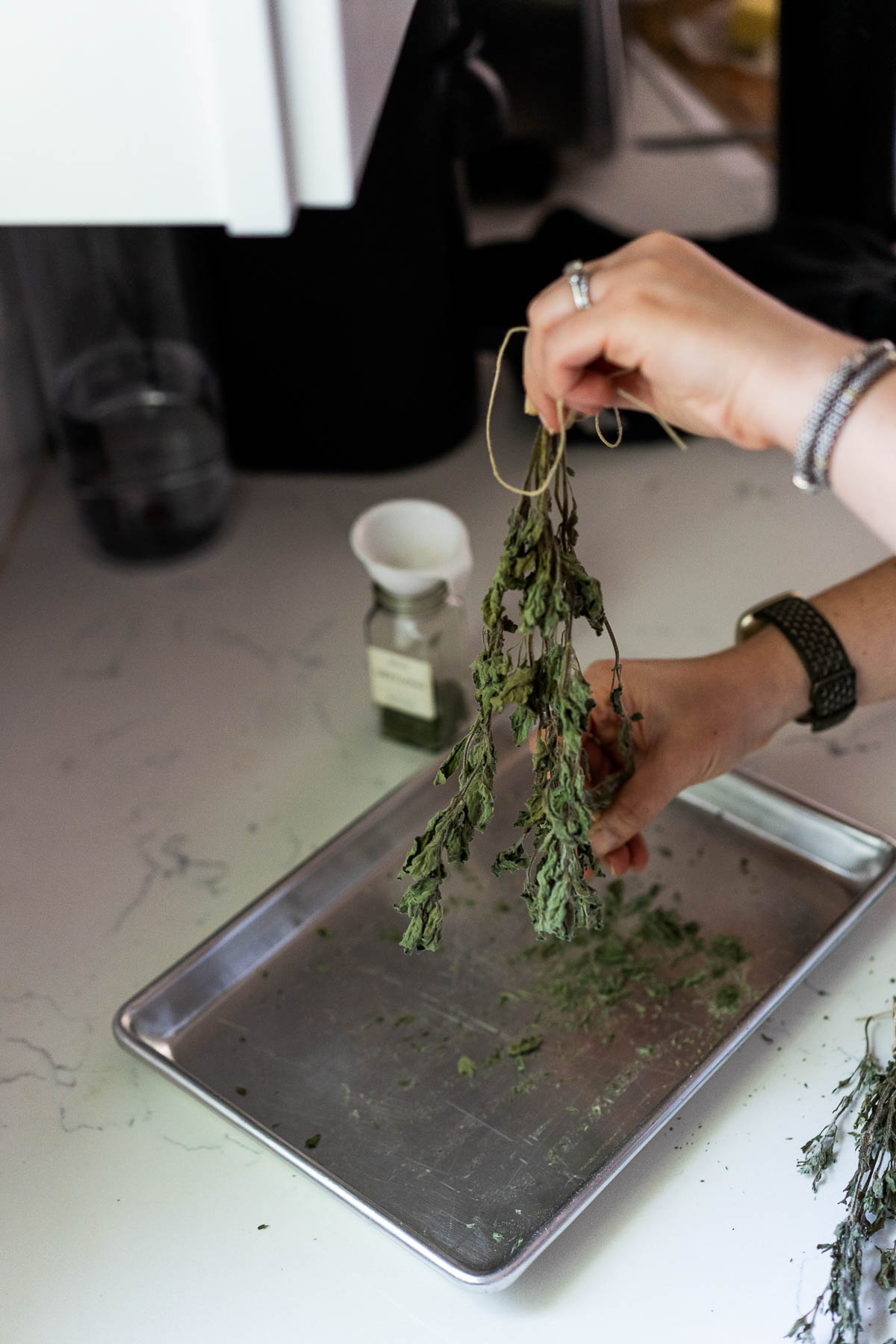
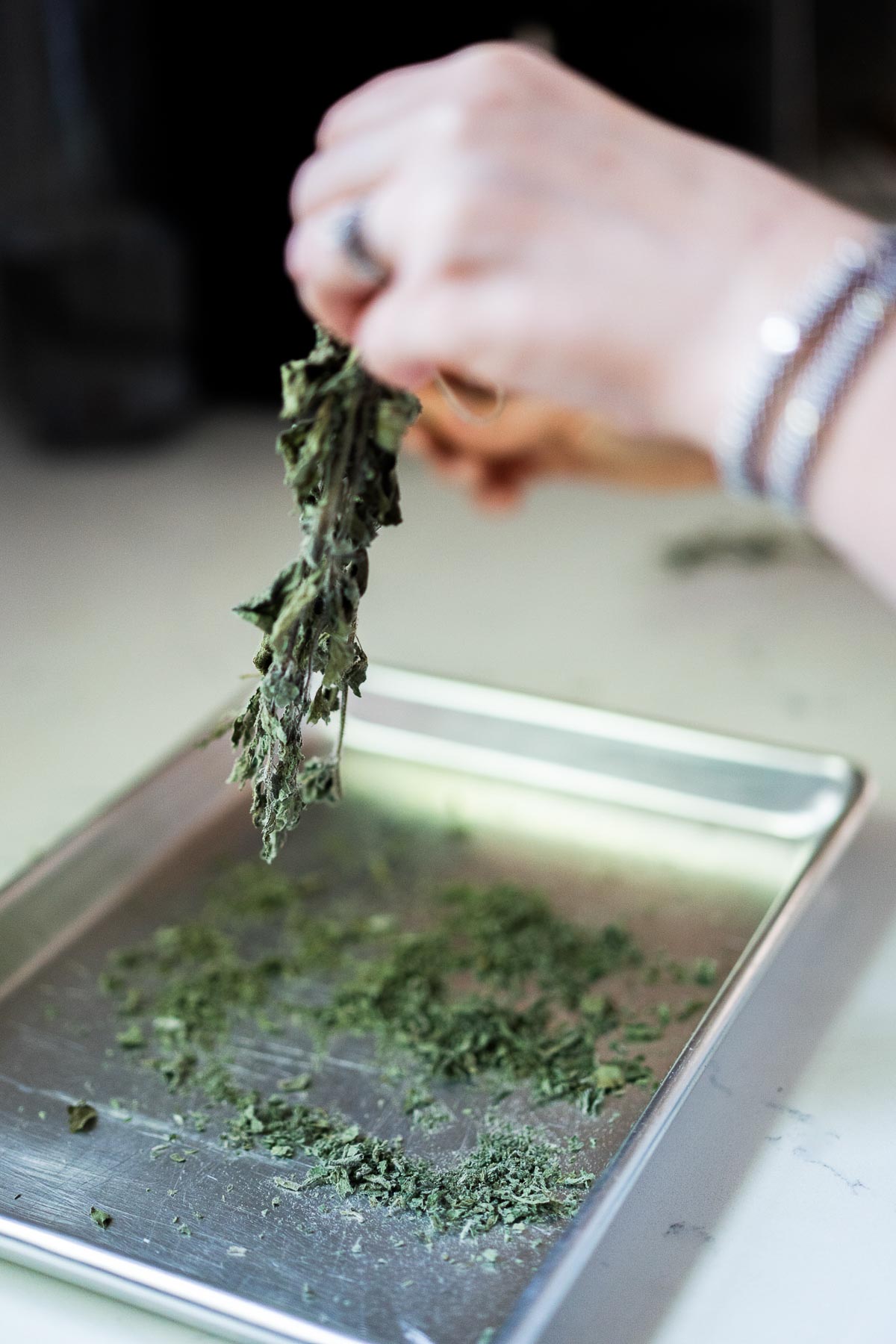
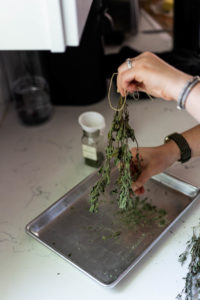
You can test if an herb bunch is ready to crumble by gently rubbing leaves between your fingers. If they crumble like dried herbs without much work, they’re ready. Some herbs take longer than others and the moisture levels in the area the herbs are drying can affect the length of time.
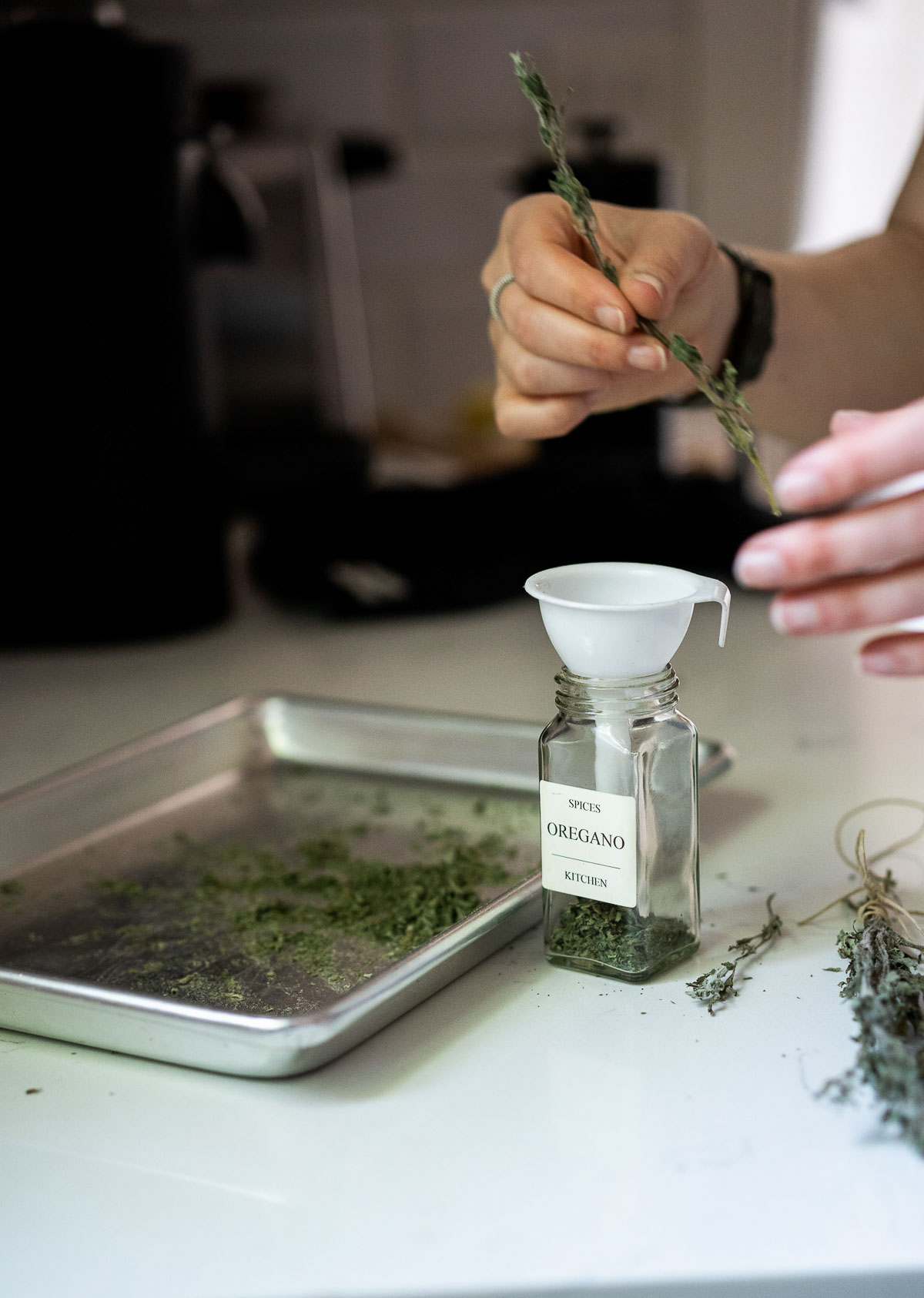
When it’s time to crumble the leaves from the stems, I like to do it over a sheet pan. You can also use a big bowl, but you want to use something clean and wide to catch the crumbles.
I like using a sheet pan because it makes it easier to look at the crumbles and either crumble some further or remove stem pieces. The stem pieces are safe to eat, but some stems are quite noticeable (and unenjoyable) even cooked into a dish, so I like to pull them out.
In terms of size, I don’t super finely crumble my herbs when putting them into jars for storage since crumbling releases the flavorful essential oil flavors. And I end up crumbling them as I use them.
Sidenote: If you’re growing your own herbs, did you know how great herbs are in pollinator friendly gardens!
Step 5: Store Your Dried Herbs
Make sure the herbs are fully dried before storing them. Even a small amount of remaining moisture can cause mold inside the jar. Once you crumble the herbs, keep them in a sealed container. You want to prevent moisture from getting in, so store them away from heat and direct sunlight (such as in a drawer or cabinet).
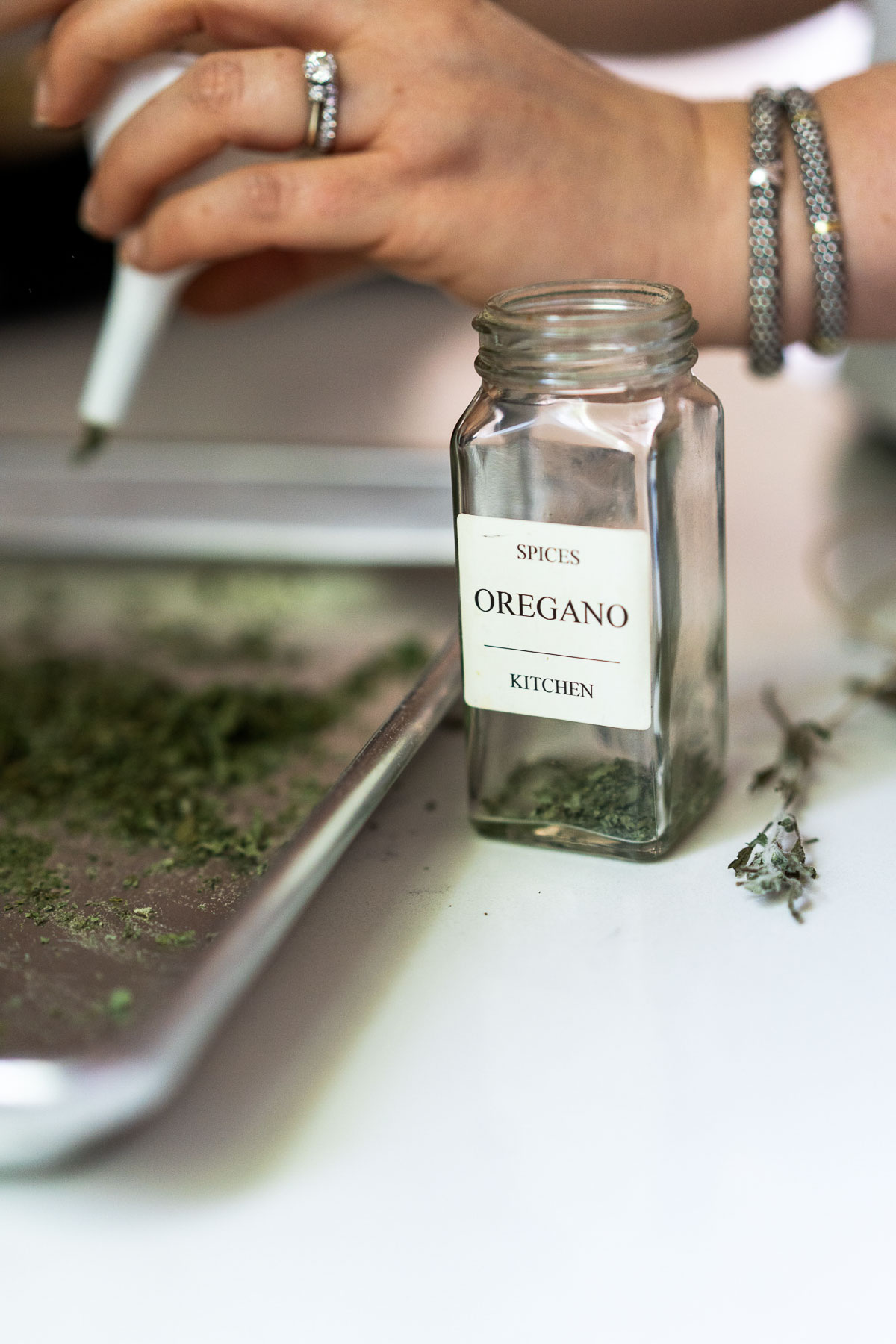
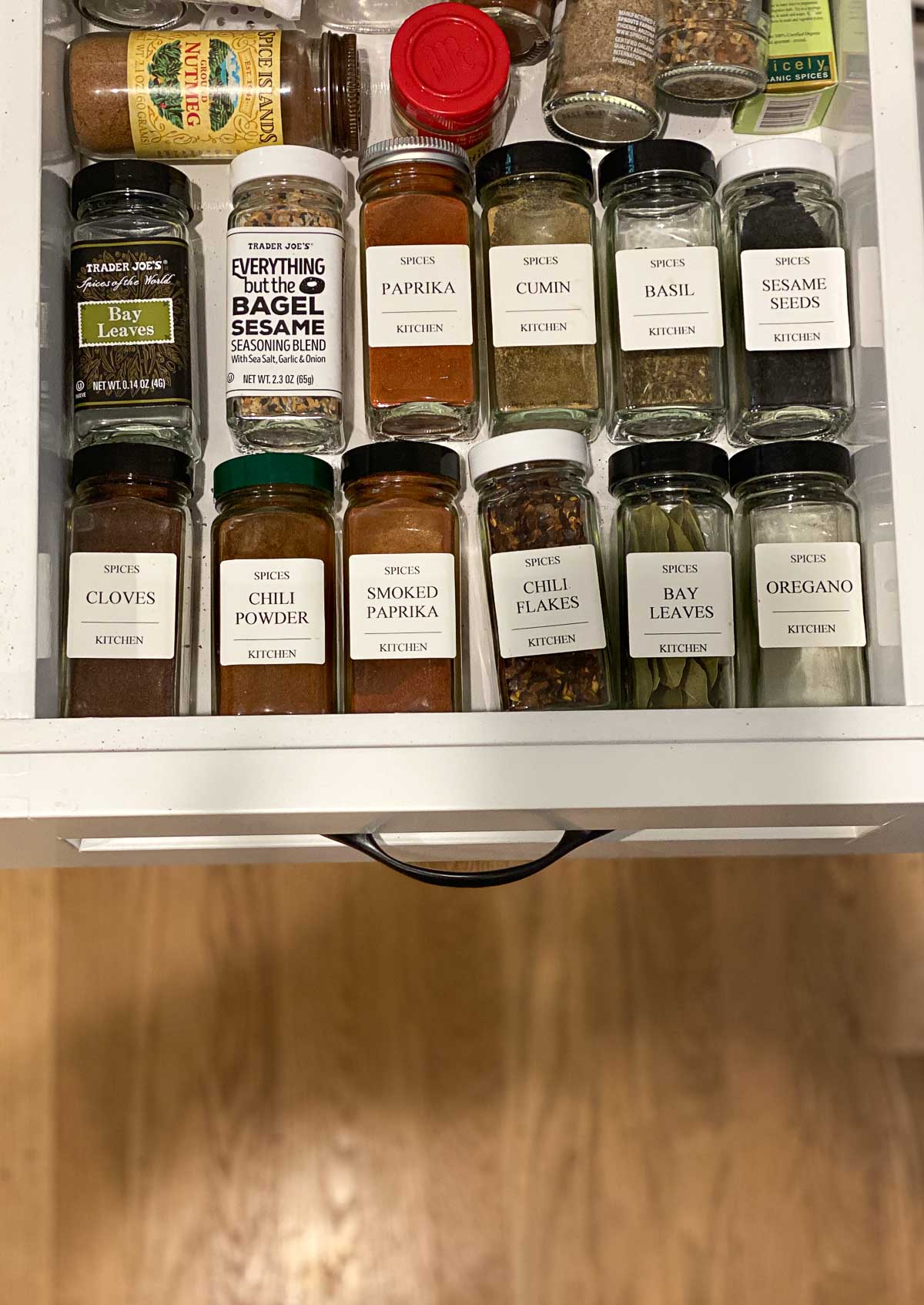
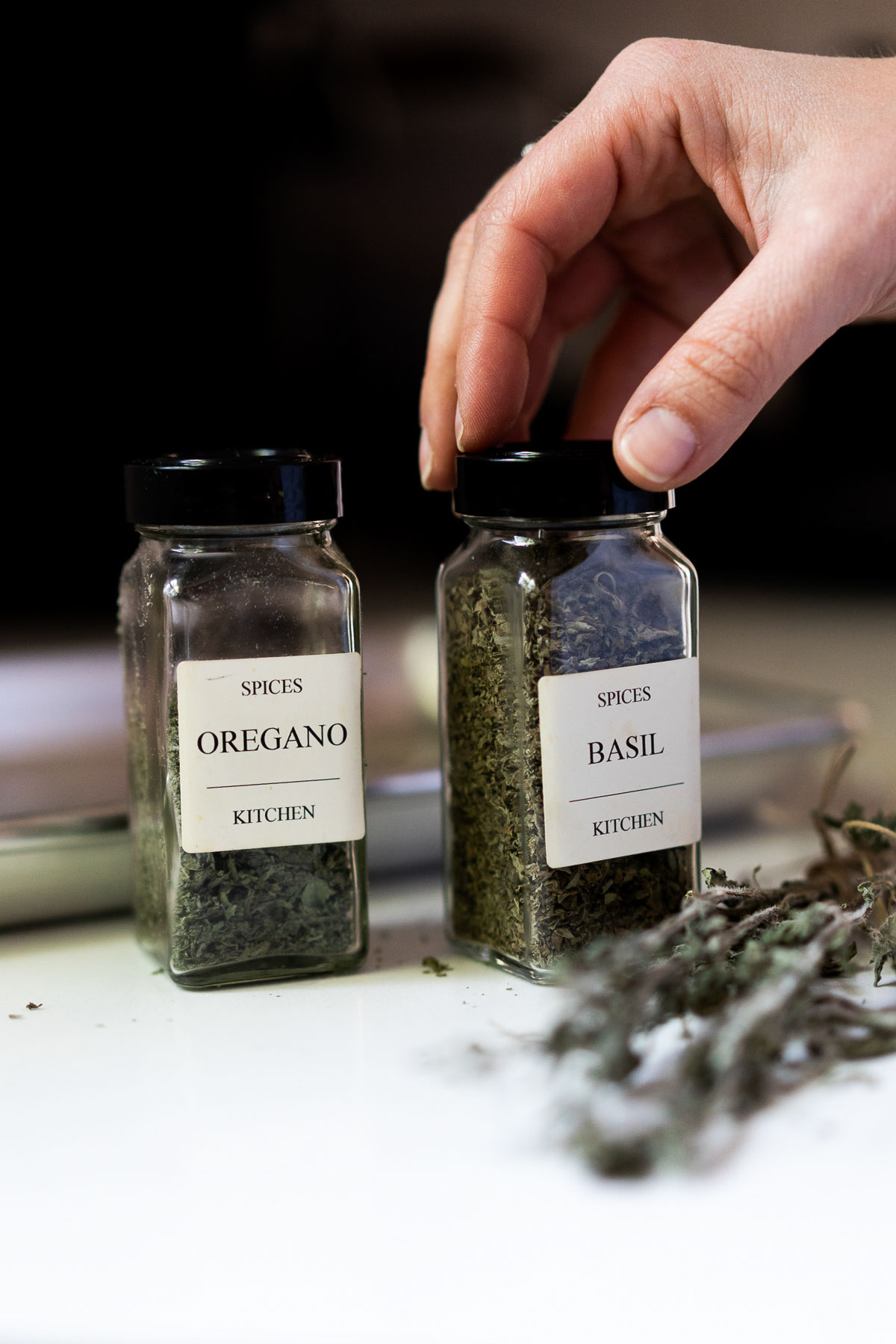
Since I dry many of my own herbs and also buy seasonings in bulk, I have my own setup in my spice drawer with upcycled jars and my own labels.
To store the herbs, I use previously purchased spice jars, cleaned the glass containers for reuse, and added DIY seasoning drawer labels. Any extras, I keep in a reused jar in a cabinet next to my stove.
Once you learn how to dry fresh herbs, you’ll likely be doing it more. These days, I intentionally grow extra oregano, thyme, basil, and mint each summer so I can dry enough to stock my spice drawer for the year. It’s become one of my favorite ways to preserve herbs from the garden, and I rarely buy these dried herbs anymore. And any extras we have, I save to give away as sustainable gifts to friends and neighbors.
Fresh Herbs to Dry
While nearly any herb can be dried, some retain their flavor and texture better than others. Here are some of my favorites, along with a few other herbs that also dry well.
Basil
Basil is easy to dry and delicious to use dried. Fresh basil takes longer to dry than, say, oregano. It doesn’t feel as dry and crumbly when it’s ready either, but it’s ready after that 4-6 weeks for sure. I use dried basil in anything Italian, soups, and hearty meat dishes like Sheperd’s Pie.
Oregano
My favorite herb to dry is oregano. I rarely use it fresh. Oregano is easily grown and you can get nice long stems with lots of leaves to dry. It crumbles very easily and it’s so versatile. I put dried oregano in nearly every dish I make for my family for dinner.
Thyme
Thyme is another dried herb I love to have on hand (it’s good fresh too). The stems are shorter and the leaves are much smaller, so know that you’ll need a lot of stems to really end up with much dried thyme. Thyme is great with grilled or roasted veggies (great with potatoes).
Rosemary
You can absolutely dry rosemary, but I don’t like to. It gets very crunchy and I don’t find it enjoyable. Rosemary is an incredibly hardy plant to grow, so try to use it fresh. You can also mix it into olive oil or butter and freeze it to get that fresh flavor and avoid any food waste. It’s heavenly in this garlic butter recipe.
Parsley
Italian parsley (also called flat-leaf parsley) can be dried, though it’s not a commonly dried as herbs like oregano or thyme. Try freezing it in butter or oil like the rosemary above. If you do want to dry parsley, you can use it in soups, sauces, casseroles, and as a simple garnish. Since the leaves are relatively thin, parsley dries fairly quickly.
I wouldn’t recommend drying curly leaf parsley.
Sage
Sage is one of the easiest herbs to dry because its thick, sturdy leaves naturally hold up well during the drying process. Once dried, it’s good in soups, stuffing, roasted vegetables, and fall-inspired recipes. A little goes a long way, so even a small bunch will last quite a while.
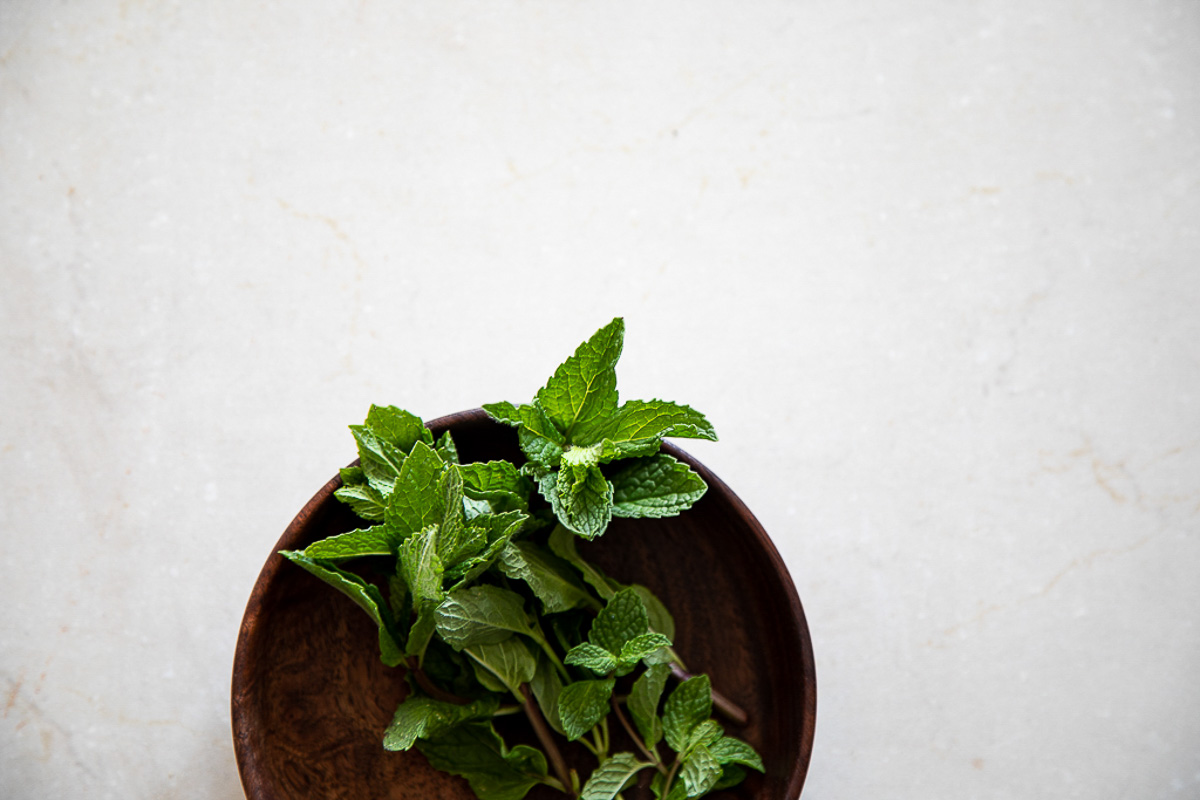
Mint
Mint is easy to dry and great dried. I use it primarily in tea, but you can use it however you like. It’ll behave like oregano in terms of stem lengths, dry time, and feel when ready to crumble.
Dill
Because of its feathery leaves, dill dries quickly. While fresh dill has a brighter flavor, dried dill is widely used in dips, salad dressings, potato dishes, and homemade ranch seasoning. Be gentle when removing the leaves from the stems, as they crumble very easily.
How to Use Dried Herbs Properly
Did you know that when you cook with dried herbs (e.g. oregano, basil, marjoram, thyme, lavender, etc.) you should rub the herbs between your fingers or palms in order to release the natural oils where the flavor is located?
It’s for this reason, I don’t worry about crumbling the leaves too small.
And when you see how much of a dried herb you’ll get from a sizeable bunch, you’ll understand why the “crossover” of fresh herbs to dried herbs in a recipe is so different. Usually they say 3 parts of a fresh herb is equivalent to 1 part dried herb (e.g. 1 tablespoon fresh to 1 teaspoon dried).
Tips for Drying Herbs Successfully
Harvest at the Right Time
Harvest herbs while they’re healthy and at their peak—not after they’ve started drying up or dying back. For the best flavor, harvest after the morning dew has dried but before the afternoon heat causes the leaves to wilt.
Avoid Humid Rooms
Choose a dry space with airflow.
Don’t Rush the Process
I usually let my herbs hang in my laundry room at least 4-6 weeks. Some of this is purely finding the time to crumble the dried leaves more than the time necessary.
Dry More Than You Think You’ll Need
Fresh herbs shrink much more than expected. While your bunch of fresh herbs will look massive, you’ll be surprised how much shrinking happens once they dry.
Frequently Asked Questions
How long does it take to dry fresh herbs?
In a well-ventilated, dry area, herbs usually dry in 4-6 weeks.
Should herbs be washed before drying?
Yes. There’s always dirt and debris on the leaves. There could also be bugs and other stuff in there, so you want to give them a good rinse and look over before drying them.Can you dry herbs without a dehydrator?
Absolutely. I’ve never used a dehydrator – just this air-drying method.
How do you know herbs are fully dried?
Do a sample “crumble” before taking them off the hook. The leaves should crumble easiliy when rubbed between your fingers.
How long do dried herbs last?
Dried herbs are best used within a year. They’ll be fine longer, the flavor or color might just start to weaken. Remember that rubbing dried herbs between your fingers releases hidden flavor, so you can always “awaken” the flavor.
Can you dry herbs in the oven?
There are a lot of recipes out there for drying herbs in the oven, but I think the flavor and color are greatly diminished with this method. Air-drying really is the best way to get the best dried herbs.
Recipes with Dried Herbs
I have a drawer full of herbs and seasonings, but can I just tell you that I could easily cook with just the following: cumin, chili powder, dried oregano, dried thyme, and dried basil. I do also love my Herbs de Provence, but those three herbs can satisfy in a pinch (hah – dried herb pun).
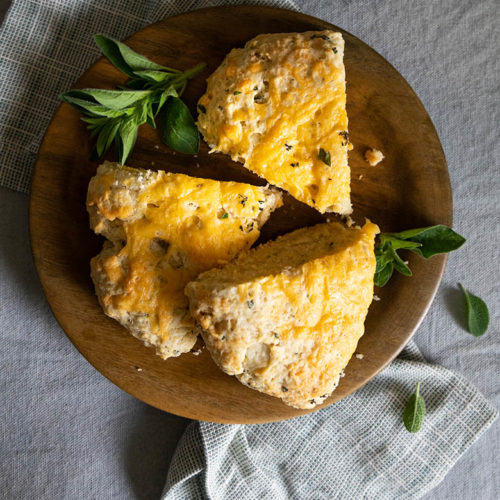
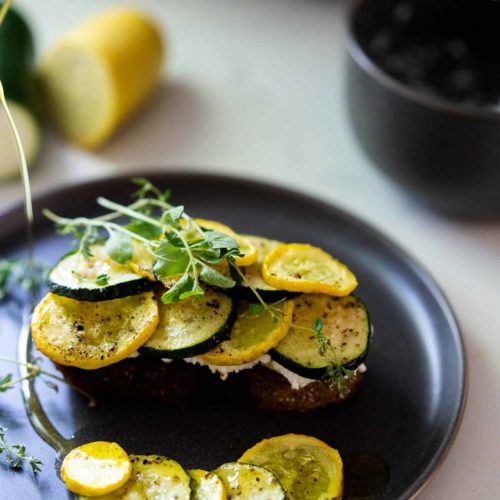
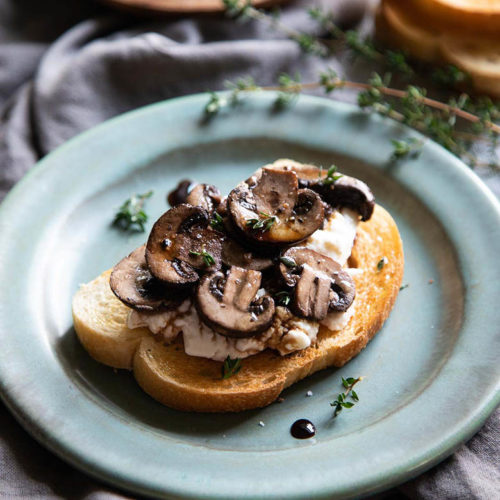
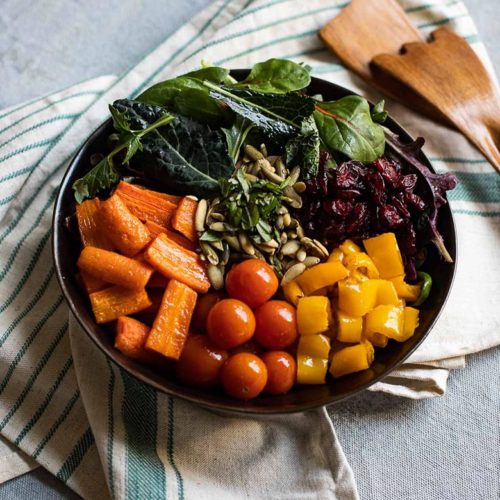
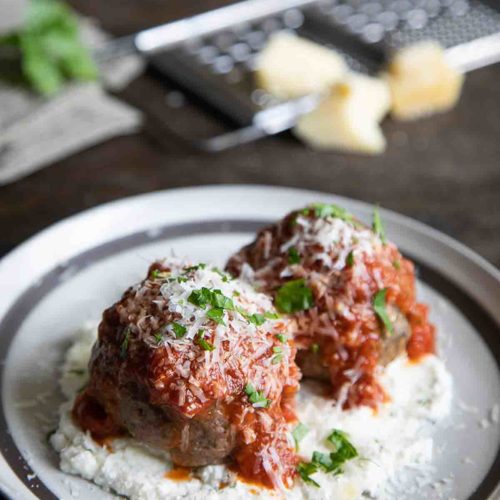
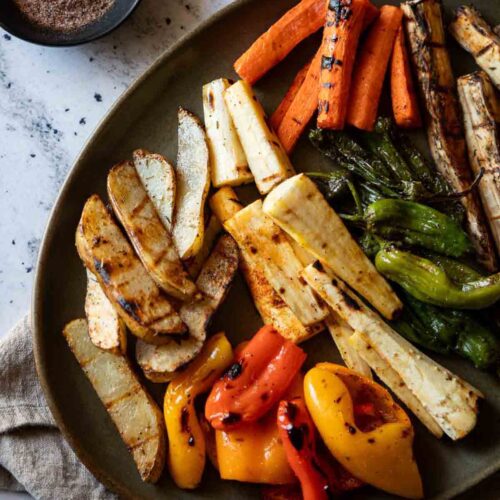
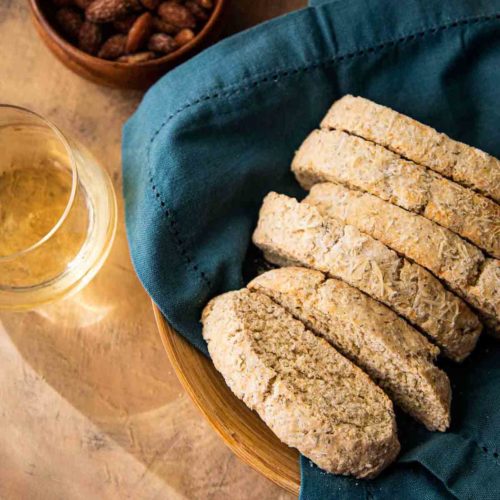
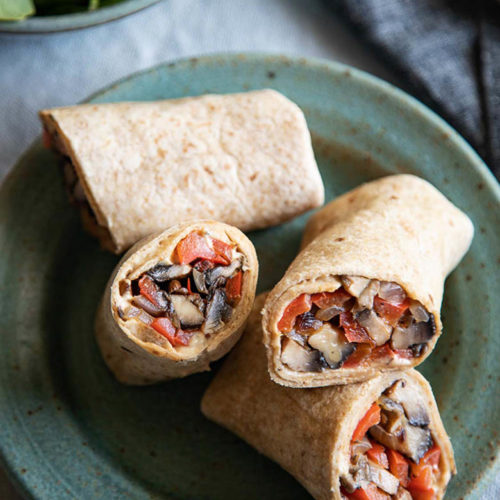
Here are a few of my favorite recipes with dried herbs and below are a few of my favorite seasoning blends to make!
Homemade Seasoning Blends
If you wondered how to dry fresh herbs, I bet you’re also interested in making your own seasoning blends!
My favorite one to have on hand is everything seasoning. I have to make sure mine has rye seeds and sea salt, but you can amend as desired.
We also always have fajita seasoning perfect for fajitas veggies and meat. Another rendition is this chicken taco seasoning mix.
Other favorites I’ve made over the years are a Caribbean Jerk seasoning mix and a Cajun seasoning for those times when you need a lot of kick.
And if you’re ready to dry and save everything, try dehydrated garlic! So yummy and great to have in your kitchen!
Dried herbs are also a great homemade gift idea. Whether you gift single herbs or make your own mixes, they’ll be very appreciated!
HOW TO DRY BASIL
Equipment
- string or twine
- 1 hook
Ingredients
- fresh basil* any quantity, any type, washed & dried
- water
Instructions
- Wash fresh herbs. Lay out on towel to dry completely.

- bunch herb stems with fresh leaves hanging down. Secure bunch at end with rubber band or string. Attach to a length of string (at least 6").

- Hang from hook in dry, well-ventilated area.Let dry 3-6 weeks (longer is fine).
- Crumble dried leaves over clean surface. Place crumbles in sealed container.

Notes
Made this recipe?
I’d love to hear how it turned out. Leave a comment and rating below.
Instagram: Tag me @lucismorsels Save This Recipe to PinterestNutrition
Photography by Sacramento Photographer Val Leddy


4 Comments