
Minimalist Kitchen Essentials
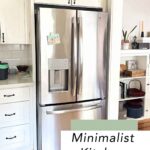
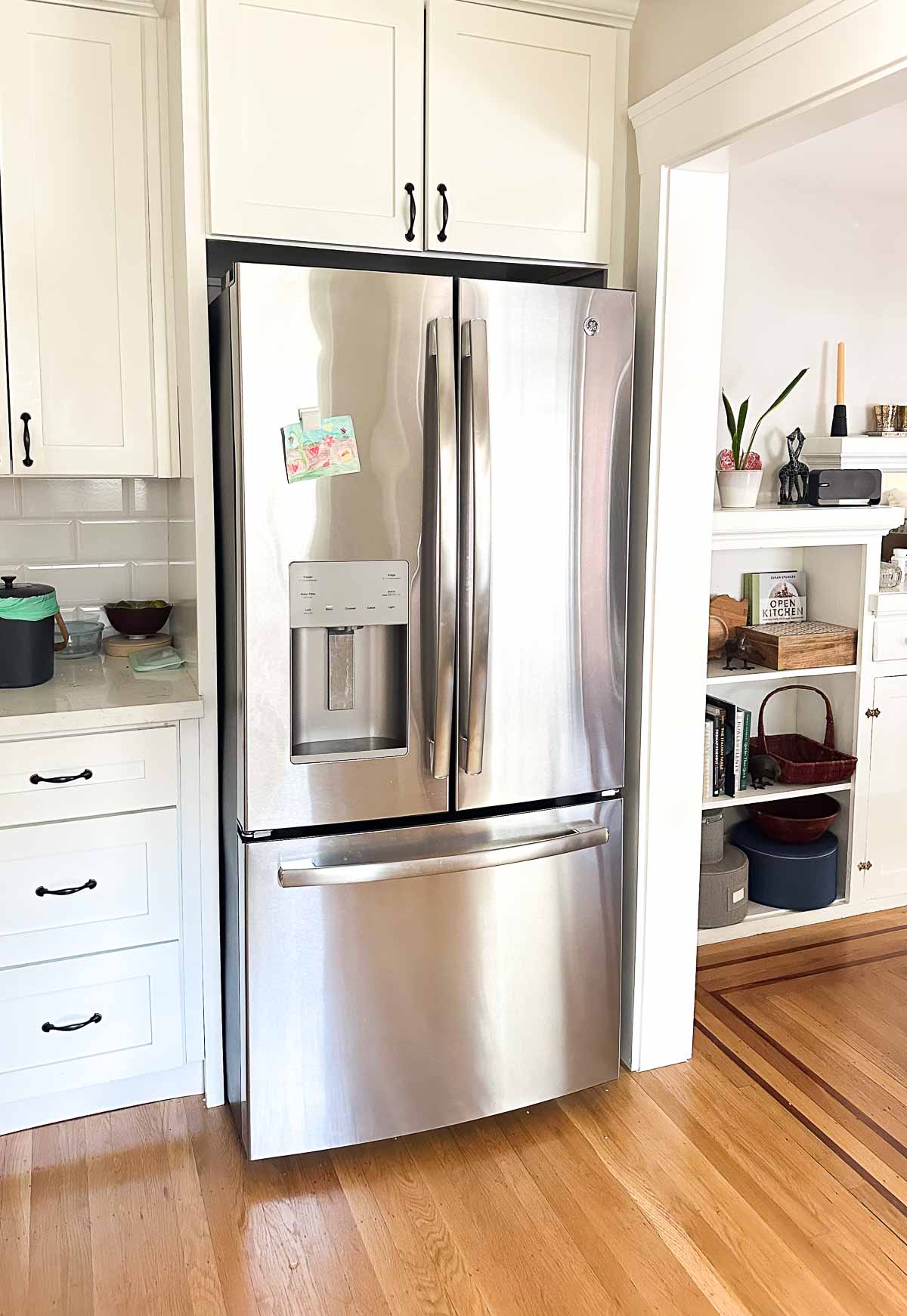
For years, I said yes to every kitchen gadget out there. I loved them all..and then I realized that my kitchen was overwhelming and I didn’t need everything. Now my kitchen is filled with the things we actually use—and almost nothing we don’t. Now my kitchen is filled with the things we actually use—and almost nothing we don’t. These minimalist kitchen essentials are based on years of figuring out what truly earns their space in our home and how we actually cook and eat.
Minimalism (the real life kind, not the suffering kind) is based on actual use and versatility for you. That means your kitchen essentials may not look exactly like mine – and that’s fine. Choosing the right items helps reduce clutter, simplifies meal preparation, and makes cooking feel more enjoyable, especially in smaller kitchens.
A minimalist kitchen isn’t about getting rid of everything or buying an expensive matching set. It’s about keeping the tools you actually use so your kitchen is easier to cook in, easier to clean, and easier to organize.
CONTENTS
Minimalist Kitchen Essentials
Before we get into the specifics of minimalist kitchen essentials, it may be a good idea to assess where you’re at to decide your next best course of action.
Are you ready to build a minimalist kitchen?
The answer is yes, if:
- you’re building a new kitchen setup from nothing
- you’ve been decluttering your kitchen and are looking to really hone in on what you need and what you should remove
- you have a kitchen but feel you’re missing some essentials
The answer is no, if:
- you know you have too many items in your kitchen but don’t know where to start and feel a bit overwhelmed.
If this is you, not to worry! I recommend starting smaller, so you can feel accomplished sooner and without getting overwhelmed. My decluttering checklist (with printable) has a section just for the kitchen. You can also start smaller (a major feel-good win though) with how to organize your refrigerator.
Once you start moving the easy things along, you can start seeing items you may not need. Then come back here to finalize your minimalist kitchen essentials! Every step you take is great, I promise! It’s a process for us all.
What Is A Minimalist Kitchen
There are two levels of essentials to consider for your kitchen – the items that get used everyday and the items that are seasonal or sporadic but still important.
Everyday items include knives, bowls, pots, utensils, etc. These are the items that will be very similar between all of us.
Remaining kitchen essentials are the items that are used less regularly but still often enough to merit a spot in your home. For me, it’s a stand mixer, a crockpot, cooling racks, and a large selections of knives.
For others, items might be an ice cream maker, a tenderizer, a dehydrator, a blender, etc. While I might use these latter items, they aren’t things I use regularly, so I’ve opted to remove them from our space.
The goal here is to choose functional, versatile, and frequently used items that support your cooking without adding clutter. A note that a larger kitchen lends itself to room for more items, but unused items take physical and mental space that you don’t need used! A smaller kitchen offers helpful parameters with limitations on space.
What Does A Minimalist Kitchen Look Like
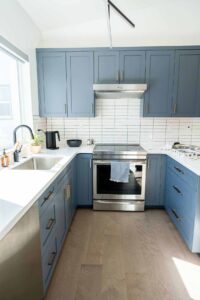
Having a minimalist kitchen means that everything has a place in your home and that each of those items is used regularly. It doesn’t mean it’s a Pinterest-worthy image, nor does it have to mean a stark emptiness. The whole idea is that there isn’t wasted space and there’s organization.
Whether you have a big kitchen or a little kitchen, a minimalist kitchen is worthwhile for your cooking ease and your mental clarity.
A minimalist kitchen checks all of these boxes:
- Cabinets close easily.
- Counters stay mostly clear.
- You know where everything belongs.
- You rarely have to dig for what you need.
- Items aren’t collecting dust or forgotten in the back of a drawer or cabinet.
What Do You Need In A Minimalist Kitchen
Cookware
The pieces you use to cook most meals.
Examples:
- Baking dish (optional, depending on how often you bake)
- One small and large skillet
- One small and large saucepan
- Dutch oven or stockpot
If you’re still on the fence about stainless steel, read about the pros and cons of stainless steel cookware. I use it and absolutely swear by it, but I know it’s not an easy or inexpensive decision.
Knives & Cutting Tools
A few quality tools replace a drawer full of gadgets.
Examples:
- Cutting board(s)
- Chef’s knife
- Paring knife
- Serrated bread knife (optional)
- Kitchen shears
Cooking Utensils
The everyday kitchen tools you reach for while cooking.
Examples:
- Wooden spoons
- Silicone spatula
- Slotted spoon
- Ladle
- Tongs
- Whisk
- Vegetable peeler
- Can opener
Measuring & Prep
Only the basics for everyday cooking and baking.
Examples:
- Measuring cups
- Measuring spoons
- Liquid measuring cup
- Mixing bowls (nesting set)
- Colander
- Fine mesh strainer (optional)
Bakeware (if you bake)
Bakeware is going to vary for each of us, depending on what we bake and how often we bake. This is the place to be diligent – own what you use. For example, I don’t like using mini muffin tins (or full size if I’m being honest). I’ve donated the mini tins I used to own and am on the verge of donating the regular size.
Examples:
- Sheet Pans
- Loaf pan
- Cake pan
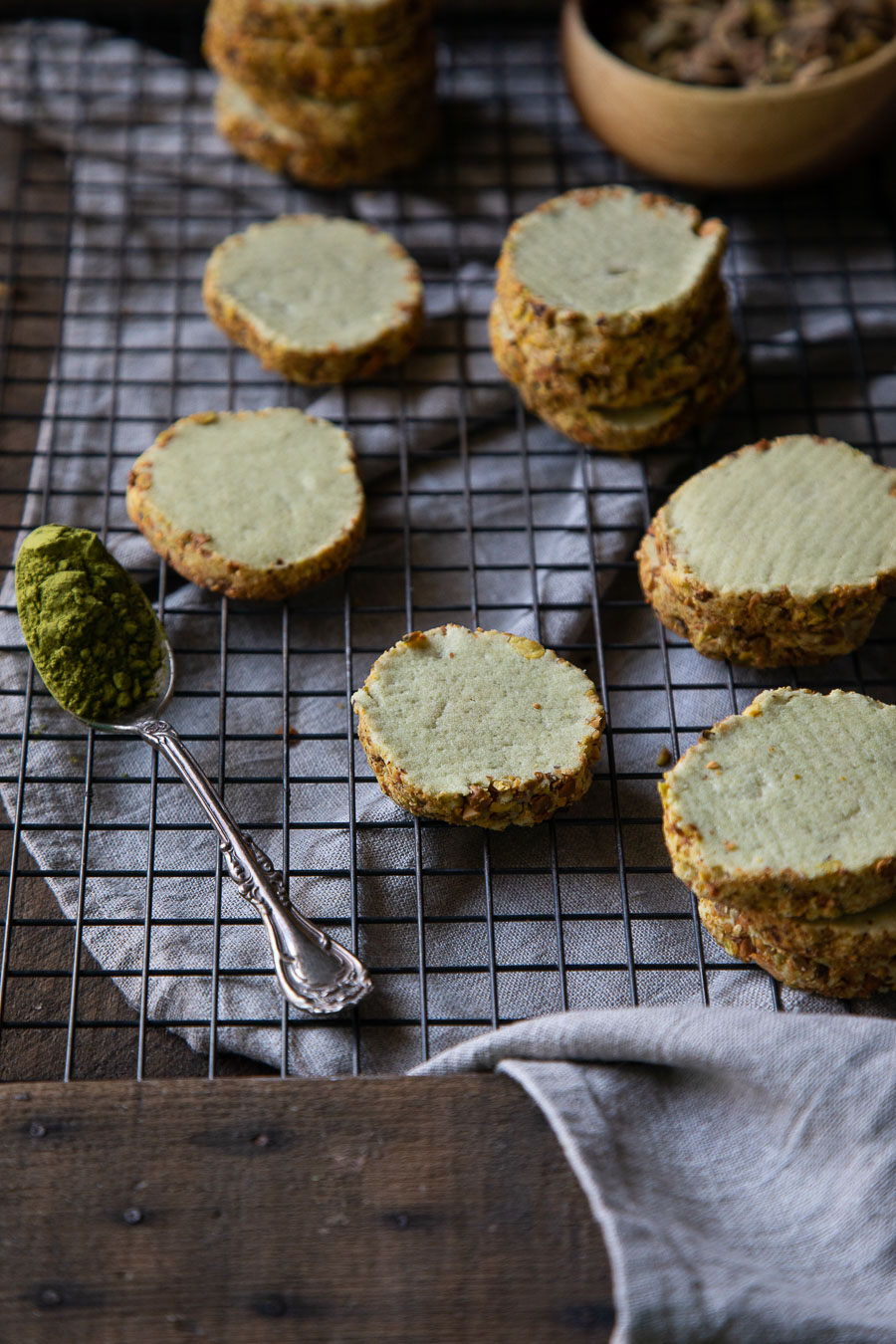
- Cooling rack
- Rolling pin (if you make dough)
Food Storage
The goal isn’t to own dozens of containers—it’s to have enough to store leftovers and meal prep without overflowing your cabinets.
Examples:
- Glass storage containers
- Mason jars
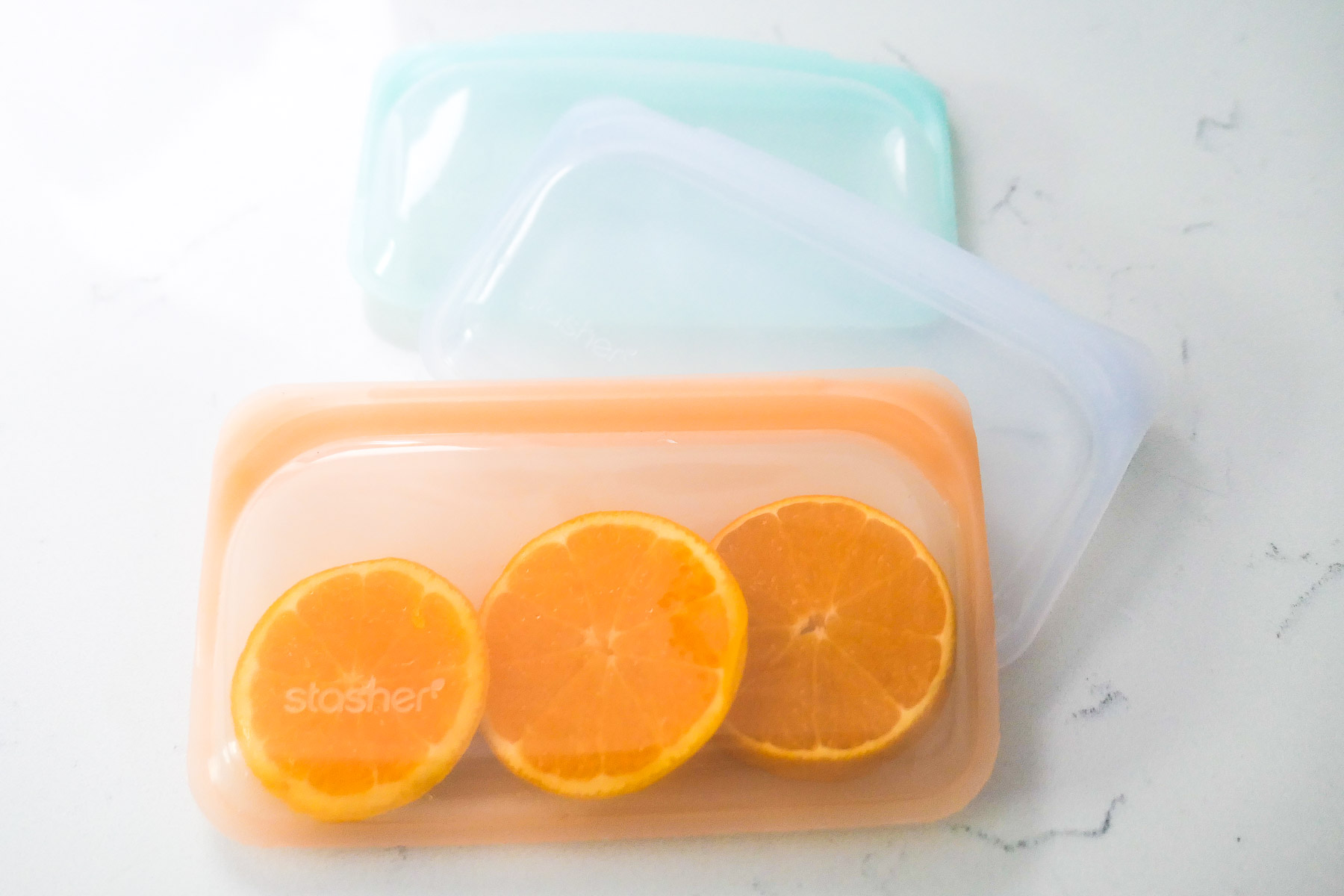
- Reusable bags (in many sizes)
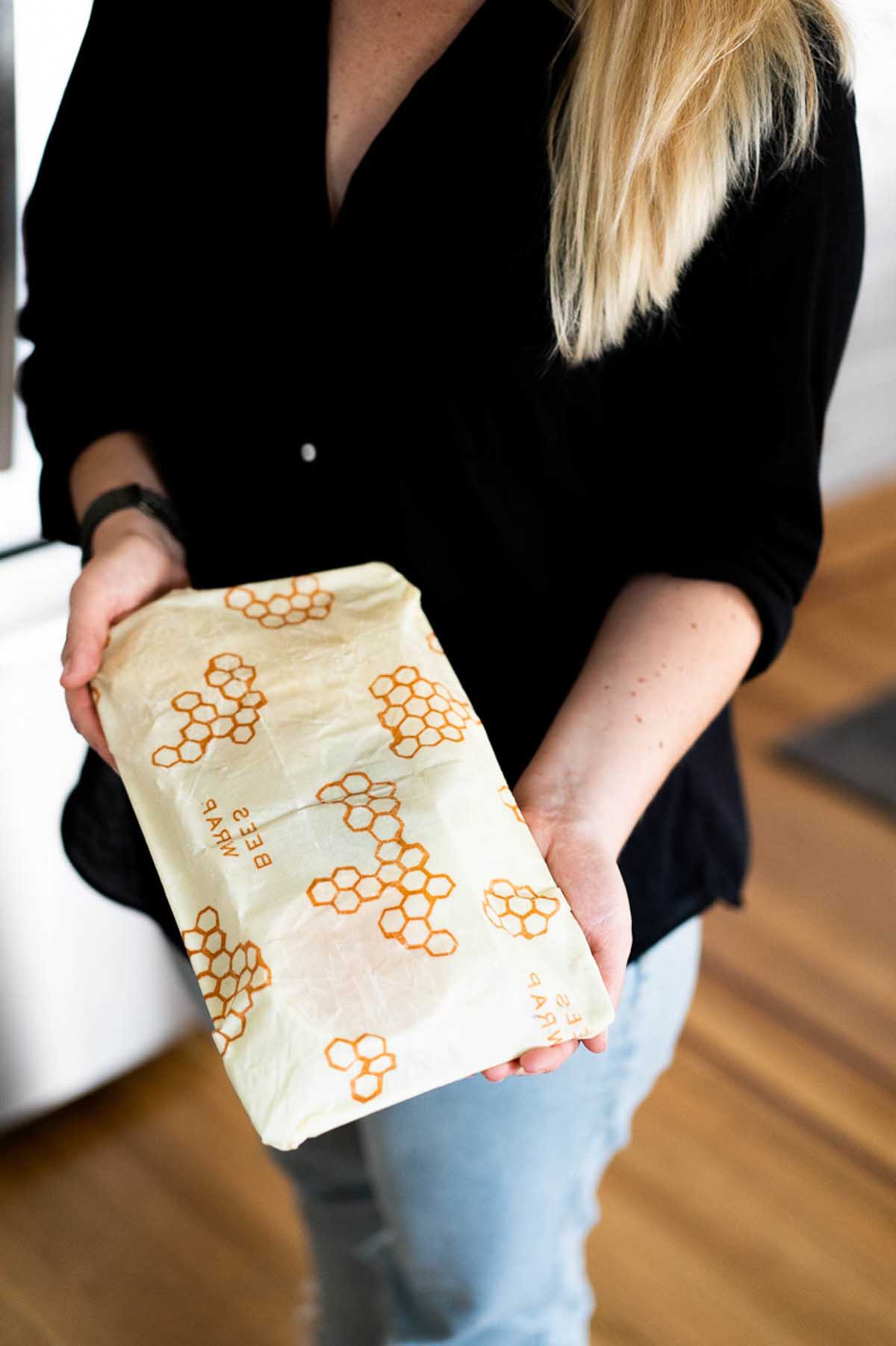
- Beeswax wraps or silicone covers (instead of plastic wrap)
I prefer glass storage containers because they don’t absorb or release smells into food and it’s great for reheating. Glass is also a safer option than using plastic with food.
If you’re trying to live more sustainably, there are so many great reusable options in the kitchen. Want a printable version? Grab my Sustainable Swaps Checklist for simple ways to reduce clutter and waste throughout your home.
Small Appliances
Another big source of kitchen clutter, so keep only what earns its space for your life now.
We’re big coffee drinkers, so we own a couple coffee apparatuses, but we use them each regularly. On the other hand, I don’t keep appliances that only come out once every few years. I’d rather borrow one if I need it than dedicate cabinet space to it year-round.
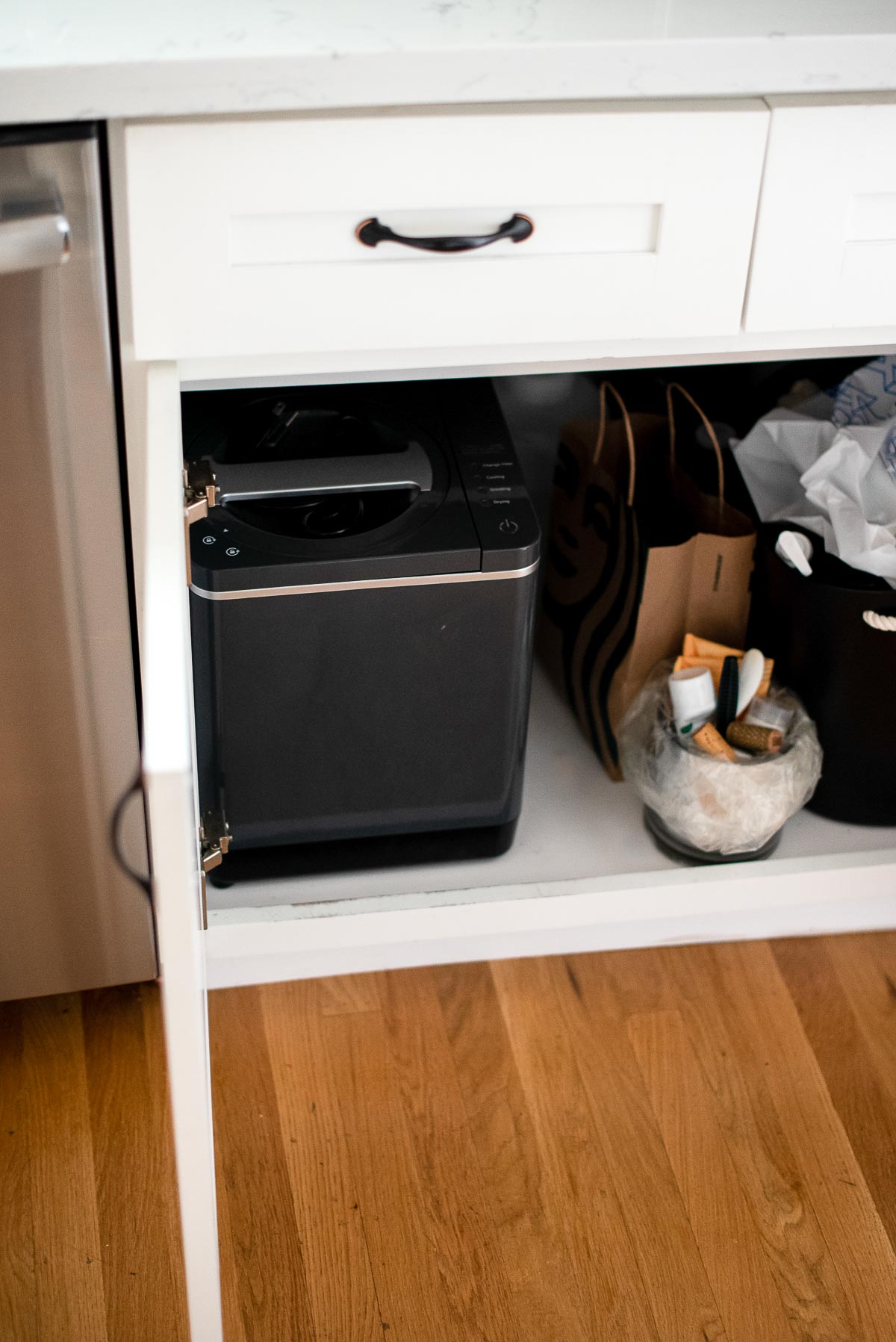
Once you have the appliances narrowed down in your space, you can read more about kitchen appliance organization as these items are usually clunky and take up visual space unnecessarily.
Examples:
- Coffee maker
- Toaster
- Blender
- Food processor or Mini Chopper
- Stand mixer
- Electric kettle
- Slow cooker or Instant Pot or Air Fryer
Dinnerware
Enough for your household plus a few guests.
Examples:
- Plates
- Bowls
- Glasses
- Mugs
- Silverware
- Serving bowls or platters (optional)
Cleaning Supplies
A minimalist kitchen is easier to keep clean with a few reusable tools.
Examples:
- Compost bin (if you compost)
- Dish towels
- Cleaning cloths
- Dish brush
- Scrub brush
- Drying rack
Don’t get rid of something you genuinely love just because it isn’t used every week. If your waffle maker makes Saturday mornings special or your stand mixer gets a workout every holiday season, those items have earned their place. Minimalism isn’t about following someone else’s rules—it’s about intentionally choosing what deserves space in your home.
The Kitchen Essentials I Reach for Every Day
➛ Reusable Silicone Bags
➛ Japanese Knives
➛ Stacking Measuring Cups
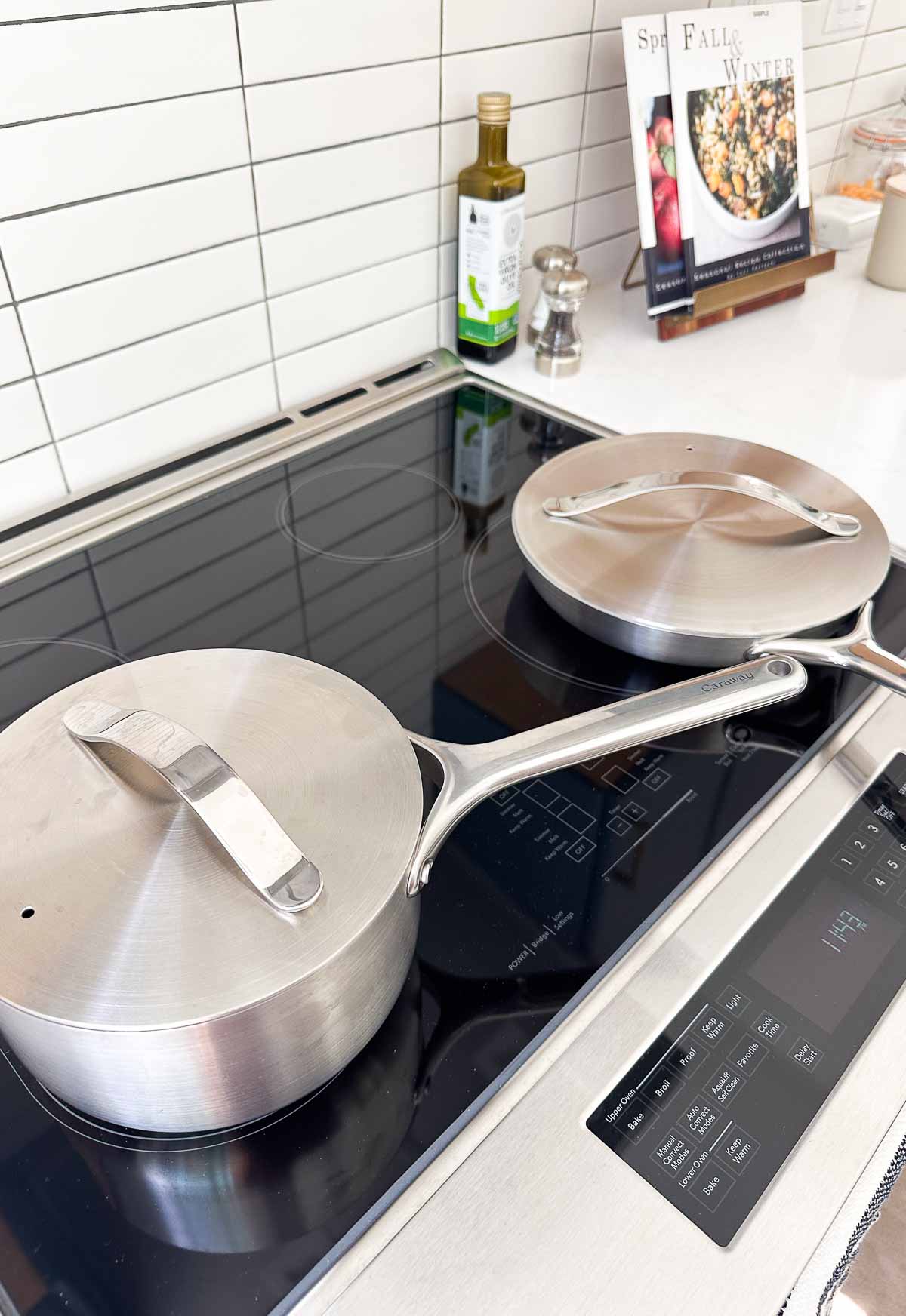
➛ Caraway Stainless Steel Pots & Pans
➛ Bench Scraper (to move chopped items to pan)
How To Create A Minimalist Kitchen
Once you know what could belong in a minimalist kitchen, the next step is deciding what belongs in your kitchen.
1. Start with how you actually cook
Before getting rid of anything, think about the meals you make and foods you prepare most often. Someone who bakes bread every weekend needs different tools than someone who mostly cooks one-pan dinners.
A minimalist kitchen isn’t about owning the fewest things—it’s about owning the right things for your lifestyle.
2. Declutter one category at a time
Work through categories above one at a time. Trying to declutter an entire kitchen at once can feel overwhelming. Working through one category at a time makes it easier to make thoughtful decisions and notice duplicate items.
- Cookware
- Utensils
- Bakeware
- Food storage
- Small appliances
- Dinnerware
As you go, ask:
- Have I used this in the last year?
- Do I own another item that essentially does the same job?
- Does this make cooking easier?
When you’re looking to declutter, try listing items for free in your local Buy Nothing Group or sell them on Facebook marketplace (or the like). After that, if the items are in good, working condition, you can take them to donation drop offs.
3. Choose versatile, multi-purpose items
This is really the heart of minimalist kitchens.
Examples:
- Dutch oven instead of several specialty pots
- Chef’s knife instead of multiple gadget knives
- Glass food storage that doubles as meal prep and serving dishes
- Sheet pan for roasting vegetables, baking, and reheating
Fewer pieces that work harder usually means less clutter and less money spent over time.
4. Keep only what fits your space
Instead of filling every cabinet because there’s room, give each space a purpose.
For example:
- One drawer for cooking utensils
- One cabinet for cookware
- One shelf for food storage containers
When the space is full, it’s a sign to reevaluate before adding something new.
5. Reassess as your cooking habits change
A minimalist kitchen isn’t something you create once and never think about again. Your needs will change over time. Every few months, take a quick look through your kitchen and ask:
- What haven’t I used?
- What’s become a favorite?
- Is there anything taking up space that no longer fits how I cook?
Small, regular edits are much easier than a major kitchen purge.
Creating a minimalist kitchen doesn’t happen in one afternoon, and it doesn’t have to. Start with one category, keep what you truly use, and let your kitchen evolve as your needs change. A thoughtfully stocked kitchen isn’t about having less for the sake of having less—it’s about making room for what serves you best.
If you’re ready to simplify beyond the kitchen, grab my Decluttering Checklist to tackle one small area of your home at a time.