

Small Charcuterie Board Ideas (How to Build the Perfect Board for 2–6 People)


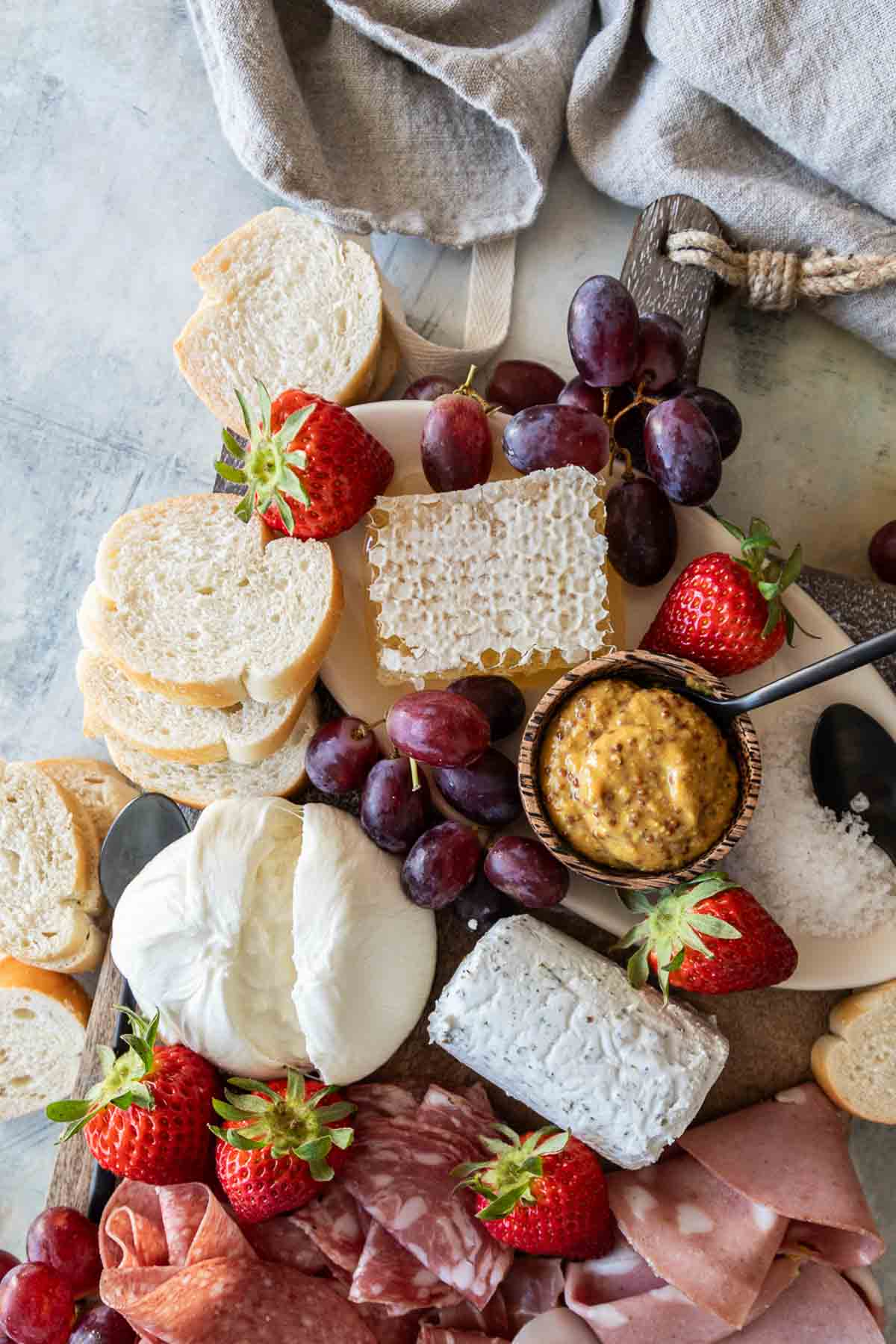
I love a charcuterie board – who doesn’t?! But somehow the delicious trend has gotten a little out of control with boards becoming masterpieces of art, requiring a degree in something. An authentic charcuterie board is a small, simple affair (usually just meat or cheese). So let’s get a little back to the basics with these small charcuterie board ideas. Whether you’re making a mini charcuterie board for date night or a simple spread for a few friends, it doesn’t have to be complicated.
Most people I know are intimidated by the process or they easily overdo it every single time, leading to lots of food waste. So let’s start with the basics. A small charcuterie board is usually a light grazing, making it perfect for a group of 2-6. You can always amend and expand depending on your guests.
Below are general guidelines for buying the right amount of meat, cheese, fruits, etc. as well as arranging tips, using up any leftovers!
Whether you’re putting together a simple date night snack, a summer appetizer, or a holiday gathering, a grazing board is easy to customize.
CONTENTS
How to Make a Small Charcuterie Board
It’s very easy to overthink a charcuterie board or to think you aren’t good at it. Let go of that because there is no single “right” way to do it and I’m pretty sure your guests will enjoy your board no matter what.
It’s also important to remember that choosing a few quality ingredients creates a beautiful board instead of jam packing it in with everything possible. Start with ingredients you enjoy eating. Your guests are more likely to love a board filled with familiar favorites than one packed with trendy foods that may go untouched.
How to Plan Your Charcuterie Board
A well-balanced appetizer board typically includes cheese, cured meats, crackers, fresh fruit, nuts, and a few sweet or savory accompaniments. And those accompaniments can absolutely be whatever you already have on hand.
We almost always have crackers, mustard, honey, and almonds. I almost always use whatever fruit is already in season because it’s usually the sweetest, least expensive, and easiest to find. Those become the foundation of our charcuterie boards because they’re already in our kitchen. Instead of shopping for a long list of specialty ingredients, I only pick up a couple of cheeses and a package of cured meat.
Before you head to the grocery store, take a few minutes to make a simple plan. Knowing how many people you’re serving and what categories of food you need will help you buy just enough for a beautiful board without overspending.
Know How Many People You’re Serving
Small charcuterie boards (sometimes called mini charcuterie boards) are typically designed for 2-6 people. The recipe card below gives you recommendations for a board for 4 to be served as a small meal.
This brings us to the next question: How are you serving this charcuterie board? Is it an appetizer, snack, or the main meal. An appetizer board requires less food than one replacing lunch or dinner. If this is going to be an appetizer or accompaniment, then I really encourage you to pull back when shopping.
A Simple Charcuterie Board Shopping List
- 2–3 cheeses
- 1–2 cured meats
- 1–2 types of crackers or sliced baguette
- 1–2 fresh fruits
- 1 small bowl of nuts or nut/fruit mix
- 1-2 add-ons (e.g.such as honey, jam, whole-grain mustard, finishing salt)
Estimate How Much Food You’ll Need
A general rule of thumb is to plan for 3–4 ounces of food per person if you’re serving the board as an appetizer, or 6–8 ounces per person if it’s the main dish.
Buy Ingredients You’ll Use Again
Choose cheeses, fruit, crackers, and spreads that can easily become lunches, snacks, or breakfasts later in the week. It’s one of the easiest ways to keep your grocery budget in check while reducing food waste.
You know what you’ll never see on a charcuterie board at our house? Olives. We all detest them – even though I know they’re a favorite for others. I don’t know what kind to buy and any extras won’t be eaten, so they’re happily waiting for someone else’s board!
How to Choose Your Ingredients
Here is the order in which I arrange my charcuterie boards – big and small. Yes, I like to do a bit of arranging and adjusting, but I would argue that it isn’t important. The right ingredients on the board is what really matters.
Meats
Start with the meats. For a small group, a charcuterie board needs no more than 1-2 meats if you plan to do cheese as well. If you’re shopping at some place like Trader Joe’s, the meat selection may be small but still plentiful. My go-to choices are salami and prosciutto. (see my Trader Joe’s charcuterie board for a bigger board with a complete shopping list).
If you’re shopping at a butcher or a store with a large selection of meats, there are many options. It can feel a little overwhelming, so here’s a quick rundown on the meats and their corresponding types of flavors. I like to select meats from different categories for a small board like this.
- Mild & crowd-pleasing: Genoa salami, uncured salami, turkey summer sausage
- Rich & buttery: Prosciutto, coppa (capocollo)
- Bold & spicy: Soppressata, chorizo, spicy salami
- Smoky: Smoked sausage or smoked salami
- Lean: Bresaola or turkey charcuterie
Cheeses
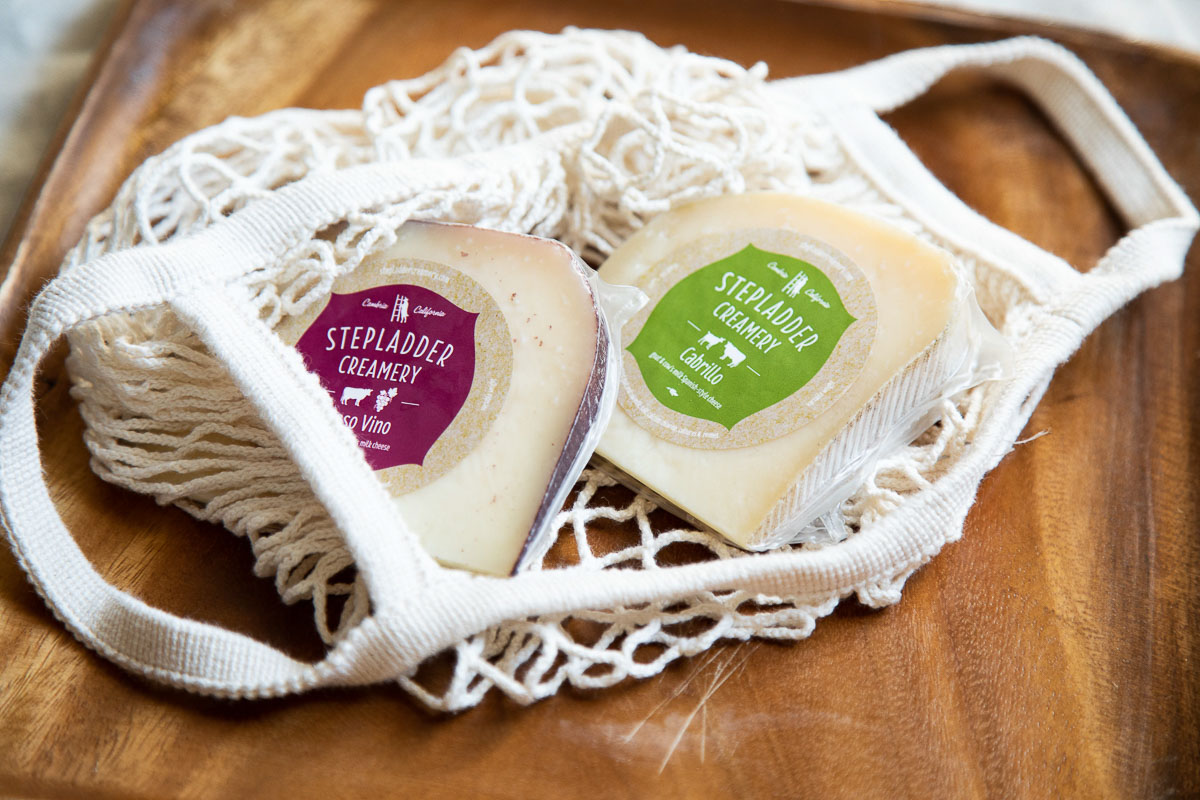
And then obviously the cheeses for your board. A small charcuterie spread needs no more than 2-3 cheeses. I’d honestly stick with 2 unless this is more of a meal replacement.
Below is a helpful breakdown of cheeses. Try to have one soft or creamy cheese and one firm cheese. I usually choose one milder cheese and one with a bolder flavor. Alternatively, you can do two more mild cheeses.
Soft & Creamy – Mild, spreadable cheeses that pair well with crackers, fruit, and honey. I’ve found that these are usually the most enjoyed by our guests!
- Brie
- Camembert
- Fresh goat cheese
- Burrata (best served immediately)
Semi-Soft & Buttery – Smooth, approachable cheeses that most guests enjoy.
- Havarti
- Gouda
- Fontina
- Young cheddar
Firm & Aged – Nutty, sharp, or savory cheeses that add contrast.
- Aged cheddar (I love a white cheddar)
- Manchego
- Parmesan
- Gruyère
Bold & Tangy (optional) – Add one if your guests enjoy stronger flavors.
- Blue cheese
- Gorgonzola
- Aged goat cheese
And don’t forget to use cheese servers. These get added at the very end.
Pro Tip: I like to cut a few slices into the cheeses, so people don’t feel that they’re the first ones to ‘break it open.’
Crackers & Bread
Crackers and bread are both good options. For an appetizer board, I don’t think you need both. If you’re doing crackers – one to two options is fine. We usually just have our family-favorite multigrain seeded cracker!
Fresh Fruit
Fruit is what adds color and texture to your charcuterie board. I can’t recommend enough that you choose seasonal fruit for your spread – think berries in spring or pears and apples in fall. It’s more delicious, looks better, and lasts longer. If you aren’t sure what’s in season when, you aren’t alone. Here are helpful lists of exactly what’s in season – for every season.
For a small charcuterie board, one fruit is probably enough. You can do two if you’re feeding more. Pick fruits that are easy to eat with fingers. This might require you to do some slicing.
Nuts & Dried Fruit (optional)
I really like to use nuts and dried fruit to fill in the board. This can be any type of nut or dried fruit – in any quantity. You can serve it in a bowl to add depth to the board, or you can use them to cover up spaces between the larger ingredients.
Delicious Add-Ons (optional)
One of my favorite things about a thoughtfully created charcuterie board is the ability to play around with various ingredients and how they taste together. It’s how I fell in love with salted honey with goat cheese and a cured meat. It’s how we discovered the deliciousness of some of our favorite mustards.
These add-ons are going to be used in small amounts, so no need to go overboard. And feel free to use what you have on hand! Here is a list of fun add-ons:
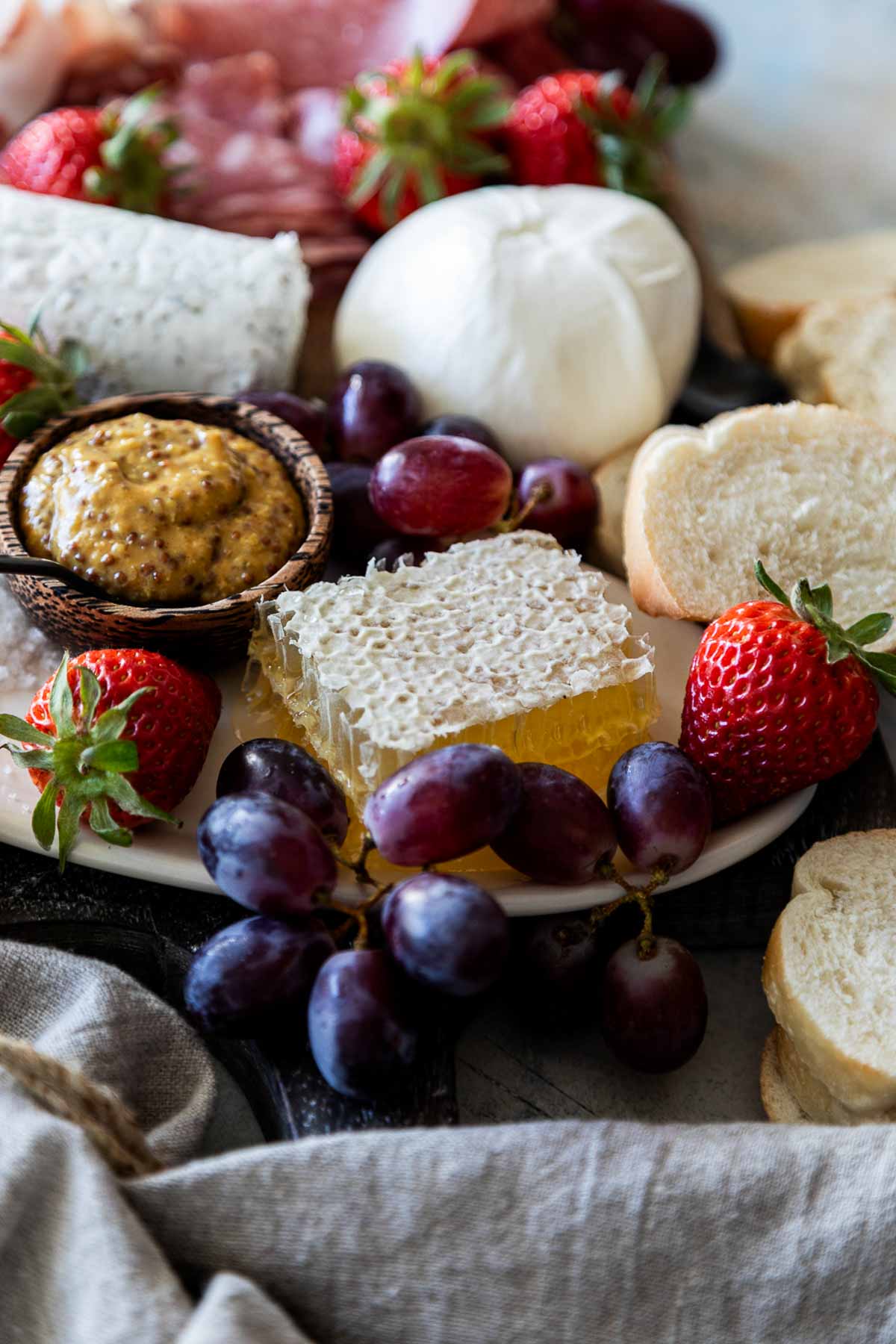
- honey/honeycomb
- jam/jelly
- whole grain mustard
- finishing salt
- dark chocolate
How Much Food Do You Need? (serving size table)
| Ingredient | Appetizer (per person) | Light Meal (per person) |
|---|---|---|
| Cheese | 1–2 oz | 2–3 oz |
| Cured meat | 1–2 oz | 2–3 oz |
| Crackers or bread | 4–6 crackers or 2–3 baguette slices | 6–10 crackers or 4–5 baguette slices |
| Fresh fruit | ¼–½ cup | ½–1 cup |
| Nuts | 1–2 Tbsp | 2–3 Tbsp |
| Jam, honey or mustard | 1–2 tablespoon per board | 2–4 Tbsps per board |
Shopping Guide By Guest Count
| For… | Cheese | Meat | Crackers/Bread | Fruit | Extras |
|---|---|---|---|---|---|
| 2 people | 2 cheeses (4–6 oz total) | 1 meat (3–4 oz) | 1 box crackers or ½ baguette | 1–2 fruits | 2–3 extras |
| 4 people | 2 cheeses (8–10 oz total) | 2 meats (6–8 oz total) | 1–2 boxes crackers + baguette | 2 fruits | 3–4 extras |
| 6 people | 3 cheeses (12–16 oz total) | 2 meats (10–12 oz total) | 2 boxes crackers + baguette | 2–3 fruits | 4–5 extras |
💡 Sustainability Tip:
The easiest way to avoid food waste is to build your charcuterie board around foods you already love. If no one in your family eats dried fruit, don’t buy them just because they’re “supposed” to be on a charcuterie board. A board filled with your favorite cheeses, meats, fruit, and snacks will always be more successful than one built to match a photo online.
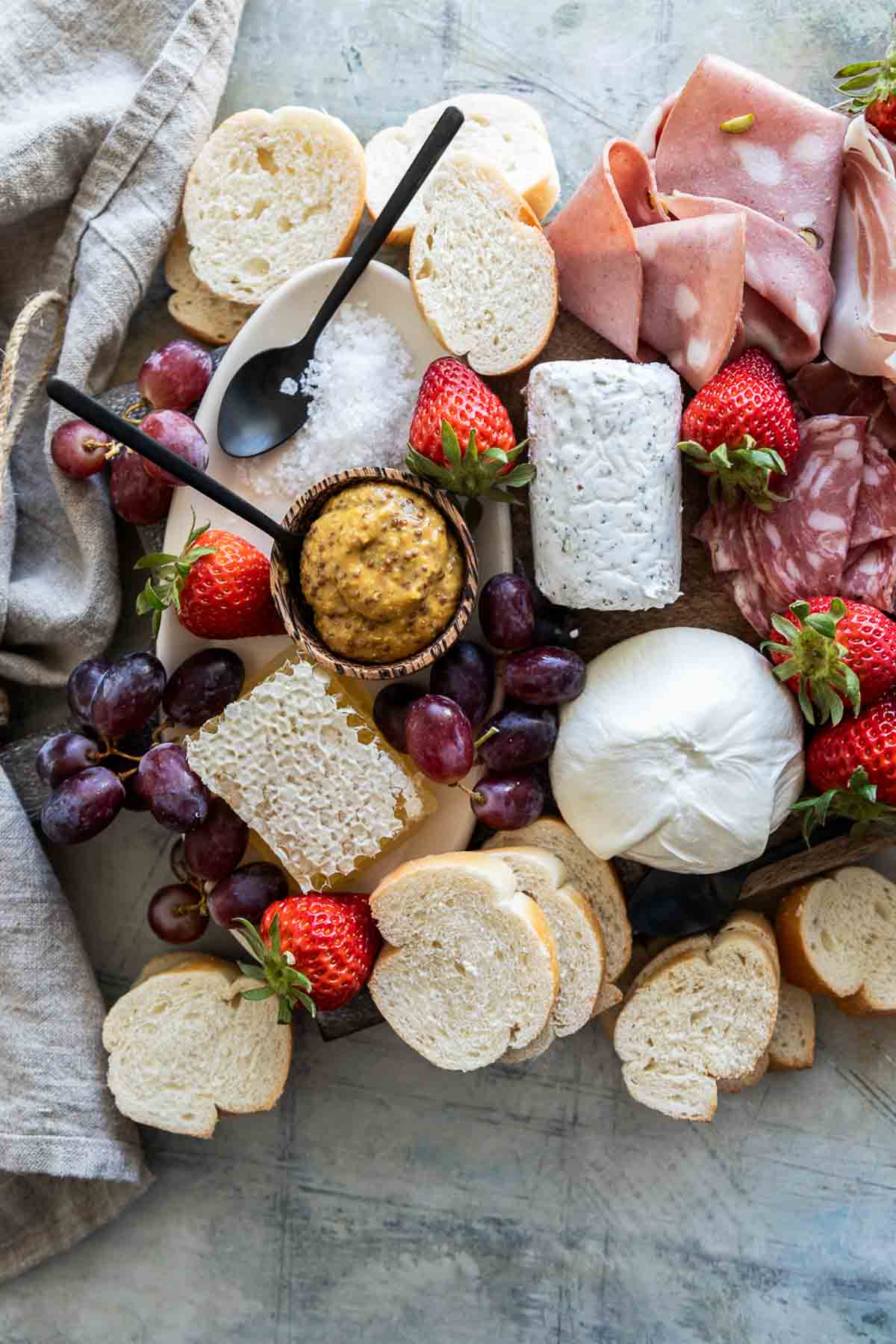
Build Your Board
Now that you have your ingredients picked out and purchased, the hard work is done! When assembling your charcuterie board, do it in this order:
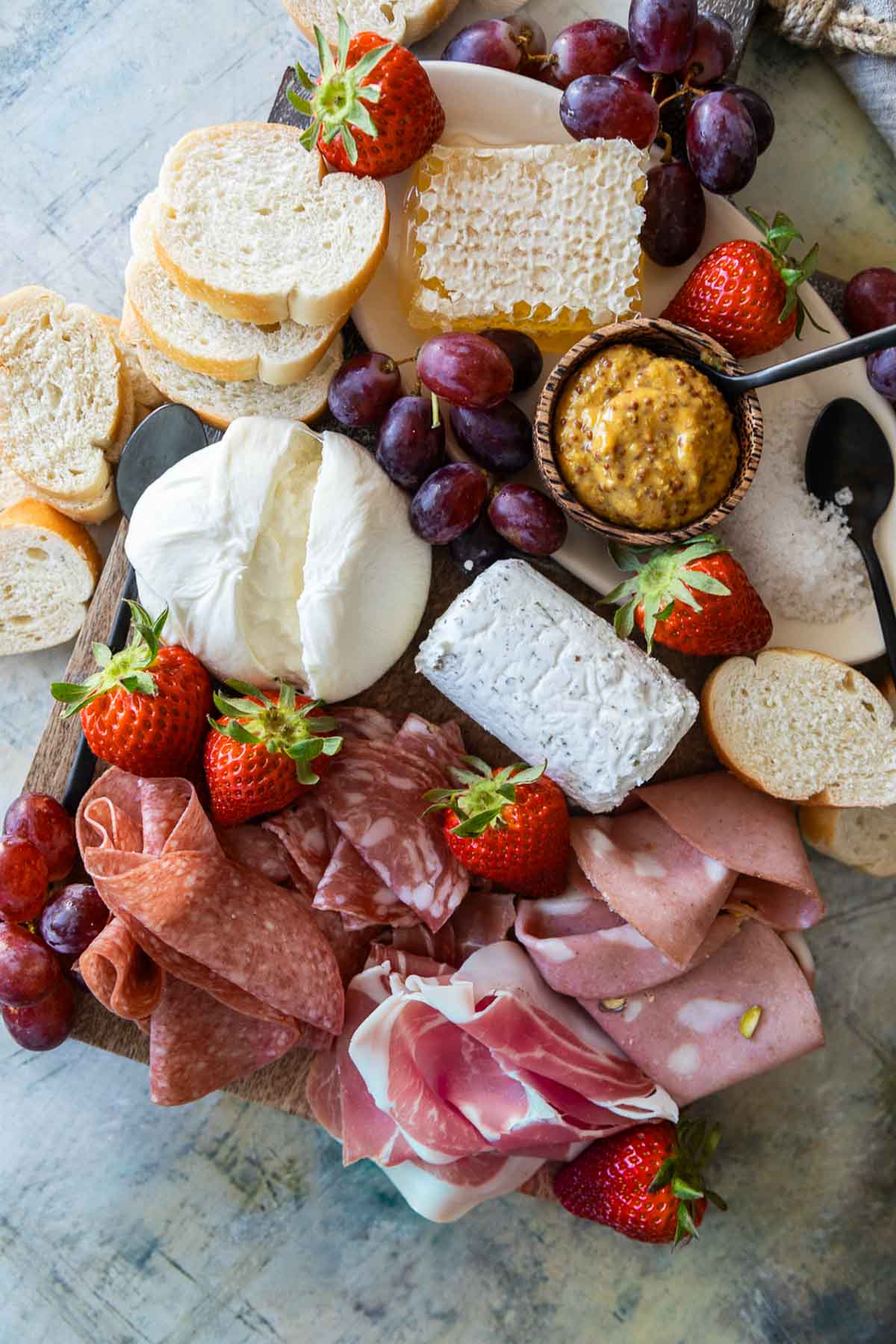
Place cheeses
Cheese are usually the bulkiest items on the board, so place them first. I like to spread them around the board so it’s easier for more than one person to get cheese at any time.
Lay down meats
Next is to lay down the meats. No need to do anything fancy here. My only rule of thumb is to lay down the slices of meat in a way that’s easy to grab. Salami slices are laid down, often in small groups around the board. For meats like prosciutto that almost seem stuck together, I place the slices one at a time (again so they can be grabbed easily). Since the slices are larger, I usually roll or fold them.
Add bowls (optional)
Bowls are certainly optional, but they’re helpful if you’re a little short on room for your ingredients. Bowls are good for nuts, fruits, or crackers.
Add crackers or bread
Since this is a mini charcuterie board, you may not have much room. I like to do stacks of crackers – not so high they’ll fall over easily. A few stacks around the board is good – easy to access and plentiful.
Fill gaps with fruit & nuts
Use fresh and dried fruits, along with nuts, to fill in the space between the meats, cheese, and crackers or bread. This is what gives it that beautiful, abundant look. Remember to leave space for the garnishes.
Finish with garnishes
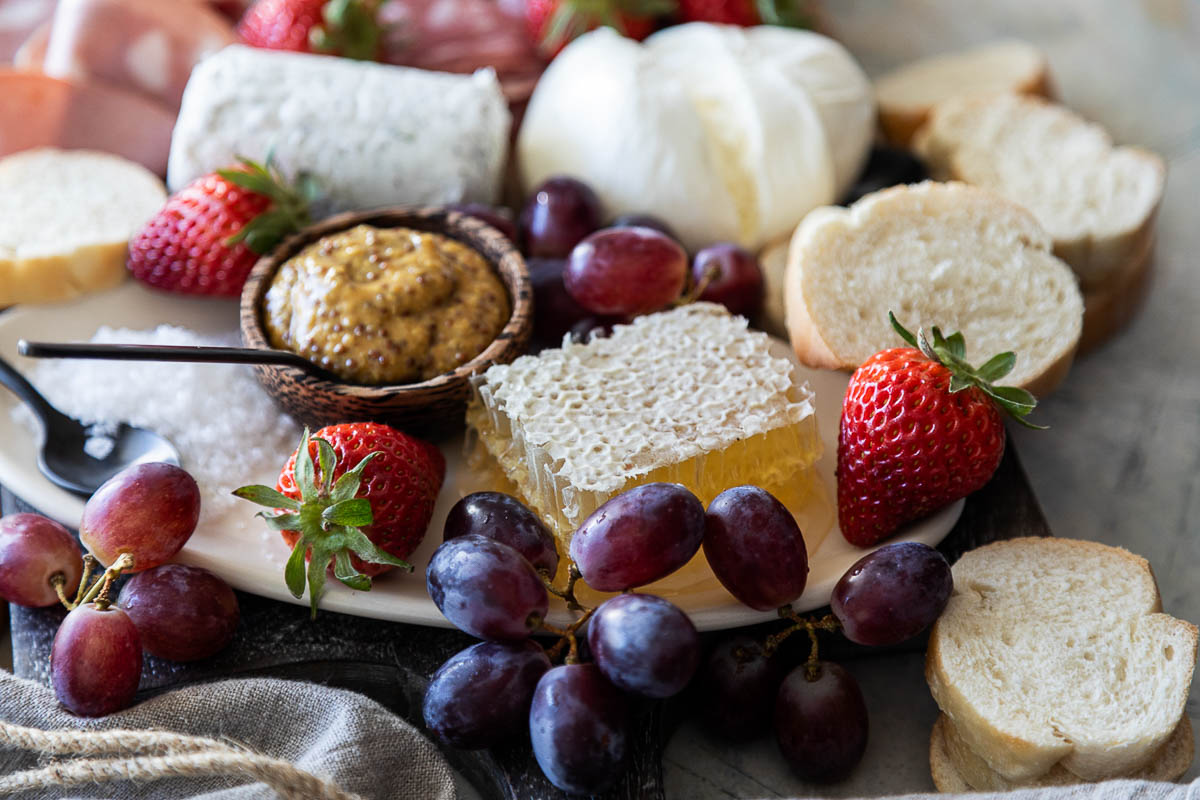
Since the garnishes are usually very flavorful, you don’t need much of them. I don’t own bowls small enough for these items (these pinch bowls would be perfect though), so I just put them directly on the board! A large pinch of salt and/or a smear or dollop of mustard.
For the honey, I use some kind of little bowl or container as it can spread very easily, creating a large mess.
Frequently Asked Questions
What goes on a small charcuterie board?
A small charcuterie board should have 1-2 meats, 1-2 cheeses, crackers or bread, fresh fruit, and some finishing touches.
How many cheeses should I use?
A small charcuterie spread needs no more than 2-3 cheeses. Stick with just 2 unless this is more of a meal replacement.
How much meat per person?
Plan for about 1–2 ounces of cured meat per person for an appetizer or 2–3 ounces per person if you’re serving the board as a meal.
Can I make it ahead?
A charcuterie board can be made ahead of time but must be refrigerated until 30-60 minutes before serving. Use beeswax wrap to let cheeses breathe a bit while still keeping everything fresh.
What fruit works best?
Seasonal fruit is best. It needs to be presented or prepared to be easy to eat in 1-2 bites with one hand.
How do I store leftovers?
There will likely be leftovers from your charcuterie board – no matter how big or small it is. Place leftover meats in a sealed bag (these reusable silicone bags are great for that).
Leftover cheese should ideally be stored in parchment paper and then placed in a sealed bag. Cheese actually does like a bit of oxygen, so suffocating isn’t the best path.
Fruit that’s been cut open, should be stored and then eaten as soon as possible.
Crackers, bread, nuts, and dried fruit should be placed in containers or sealed bags and left somewhere they will be consumed soon!
Salt, jams, honey, and mustards that were on the board should be disposed of.
My Go-To Small Charcuterie Board
If I’m making a simple board for 4, here’s usually what we’re serving:
- goat cheese or brie
- manchego or aged white cheddar
- salami
- multigrain crackers
- seasonal fruit (favorites include persimmons, figs, berries, apples, and cherries)
- honey
- finishing salt
- whole grain mustard

SMALL CHARCUTERIE BOARD IDEAS
Ingredients
- 12 oz. cured meats e.g. salami, jamon, prosciutto
- 8 oz. cheese e.g. goat cheese, white cheddar, burrata, manchego, brie
- 12 oz dried nuts and/or dried fruits
- 1 cup fresh, seasonal fruit
optional add ons
- Finishing salt
- Honeycomb/honey
- Whole grain mustard
- 1 baguette sliced
Instructions
- Arrange meats and cheeses on serving board with space between.*
- Place fruit between meat and cheese, allowing room for finishing touches.
- Add salt, honeycomb, and mustard in opens spaces and then fresh and dried fruits and nuts between it all.
- *Bread of crackers can be served on the board or alongside. If serving on the board, place on board after meat and cheese.
Made this recipe?
I’d love to hear how it turned out. Leave a comment and rating below.
Instagram: Tag me @lucismorsels Save This Recipe to Pinterest



Such a helpful writeup!