
9 Ingredients to Avoid in Makeup
Last month I shared a quick and easy list of ingredients to avoid in skincare and I’m completing that intro series today with this list of ingredients to avoid in makeup. I’ve been wearing makeup since I was a teenager. I’ve went through many of the popular makeup brands over the years, but now I only wear makeup that meets some basic standards of being ‘clean’ and non-toxic.
Unfortunately, the terms clean and non-toxic aren’t regulated meaning that any brand can use them as they like (called “cleanwashing”) and just calling something clean doesn’t mean any two have the same criteria for naming it so. There is SO MUCH information out there about ingredients and brands, but most of us don’t really have time to sort it all out. And I’ll be honest, it’s not my idea of an entertaining Friday night – no judgement if it’s yours!
Ingredients in makeup and skincare are so important. They can irritate your skin, clog pores, and (the scary part) they can have detrimental affects on your healthy in the long term.
So here’s a short list of just 9 ingredients to avoid in makeup, why these are crucial to avoid, and my recommendations for products that meet these standards (and my expectations of performance).
Each item is discussed below as far as what the ingredient is, why it’s harmful, how you can identify it, and some good alternatives.
- heavy metals
- talc
- carbonblack
- fragrance/flavor
- PFAS
- parabens
- BHA & BHT
If you just want a list of all the products my family and I use, get my Low Stress Guide to Low Tox Living!
CONTENTS
9 Ingredients to Avoid in Makeup
It’s easy to forget that makeup ingredients are more important than just efficacy. We think about putting it on in the morning and then cleaning it off at night, but we have to remember that makeup sits on top of our skin all day – just hanging out, sinking in, smearing off!
A quickly identifiable issue with all that exposure is skin sensitivities. I’m sure we can each identity a product or a brand of makeup that our skin just doesn’t like, whether it’s a rash that formed, an itchiness, or a redness. I’ve even tried some makeup products that makeup my mouth water, make my throat dry, irritate my eyes, or the smell just bothers me (I don’t know the scientific word there). These issues are all from ingredients (safe or not) in the makeup.
If you keep this in mind, you can see how makeup ingredients can also directly and immediately affect those of us dealing with acne, sensitivity, and conditions like eczema. No matter what the ingredient is that causes us issues, it’s important that ingredients (all ingredients, including scents) be disclosed, so we can be safe.
But what if you don’t have any issues with sensitivity or acne, does non toxic makeup really matter? Yes! More and more research is showing the long-term affects of ingredients on our health. Many commonplace ingredients in makeup have been linked to infertility issues and linked to cancer, linked to endocrine system disruption. Endocrine disruptors refers to the mimicking or interference with your body’s natural hormone processes.
So should we just throw in the towel on makeup? Goodness, no!! There are two important things to remember:
First, every harmful (or potentially harmful) ingredient you remove from the products you use is a step in the right direction. Let me say that again – removing just one questions ingredient is good! Below is a list of just nine makeup ingredients to avoid. With time you can work toward eliminating these and you’re already doing GREAT work and making a difference in your health.
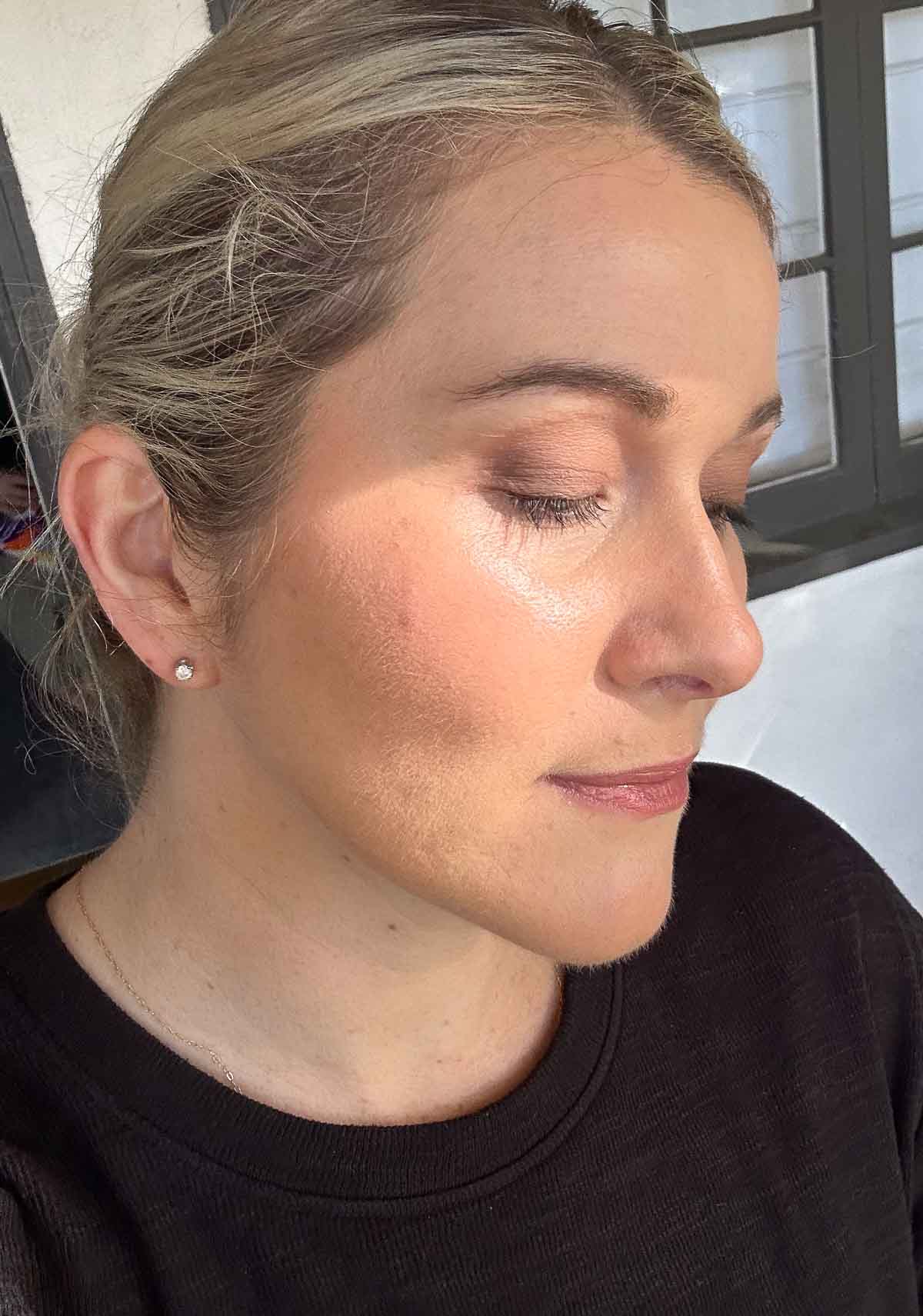
Second, there are so many brands out there that have created clean, performing makeup – meaning makeup that looks like it should, stays how you want, and doesn’t use these ingredients. You don’t have to sacrifice anything. Here’s a full look at the non toxic makeup brands I trust. And here’s a look at my clean makeup routine.
Ready to Live Sustainably?
Take the guesswork out of sustainable living – thoughtfully curated resources so you don’t have to do the research. Clear, doable, and designed to fit real life.
Are There Harmful Ingredients In Makeup
Yes. And that’s not a difficult answer. Makeup and skincare products have so many ingredients, it feels impossible to avoid these harmful ingredients (though it’s not).
You might be asking why there are harmful ingredients in makeup and the answer is simple. These ingredients have a purpose:
- to get a specific color
- as a preservative so the product stays the same as the day you bought it to months and years down the road
- to help with consistency – keeping something easier to apply or layer.
- to make the product last longer. 24 hour wear isn’t natural, so something synthetic has to be added in and this is where we start to get issues.
And then the next question is – at what cost do you want these ingredients in your makeup.
It is important to remember that an ingredient can be identified as toxic for a number of reasons – it’s important to get an idea of why an ingredient is problematic.
EWG is my go to for getting a good idea on the cleanliness of an item, but it isn’t a perfect system (one doesn’t exist). Some ingredients are identified as common or potential allergens. Other ingredients, there research is limited, which they identify with each ingredient. So while it’s a wonderful resource, you do have to read their report (not long or complicated) to get a full view.
Some ingredients are problematic for sensitive or acne-prone skin. Other ingredients are harmful not in and of themselves, but because of how they’re extracted or processed. A quick example is talc (used in powder makeup). Talc can be contaminated with asbestos (a known carcinogen). Since they often sit side-by-side in mines where talc is extracted, there is a high likelihood of contamination.
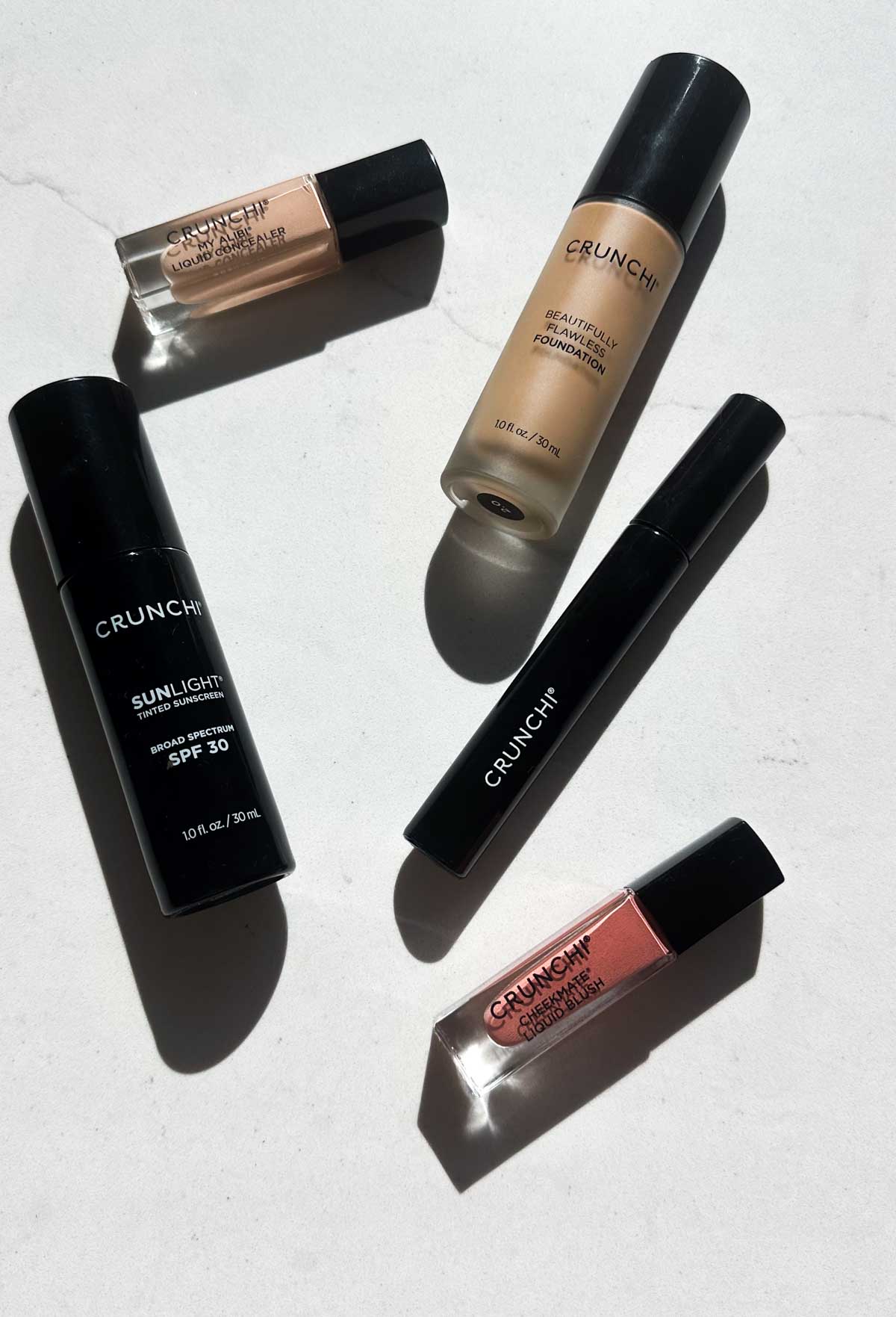
And then other ingredients are concerning because of concentrations or formulations – meaning how much of something is in a product or the mix of ingredients. This is where things really get complicated and tricky, I feel. And this is where I leave it to platforms like EWG and others to do the hard work. Well, and I also use brands that I trust to do this hard work and thinking for me (namely Crunchi).
What Ingredients to Avoid in Makeup
Heavy Metals
This is fairly specific to color cosmetics. Earth and naturally-derived pigments carry the risk of being contaminated with naturally occurring heavy metals (e.g. lead, cadmium, arsenic, mercury, etc.). These are all tied to reproductive harm and carcinogenicity. The payoff here is that the colors aren’t as rich and deep.
It’s really up to the manufacturers and brands to do 3rd party testing for these trace minerals. Most companies now use synthetic materials to get the colors they want. These still should be tested for heavy metals. And, sadly, many companies still don’t do testing for the presence of metals.
EU standards are tighter than the US standards for the presence of heavy metals.
Talc
Talc can be contaminated with asbestos (a known carcinogen). Since they often sit side-by-side in mines where talc is extracted, there is a high likelihood of contamination.
Talc is often used in powder-based products such as finishing powders, blushes, eyeshadows, bronzers, powder foundations, and even in hair products.
The safe alternative to talc is mica, BUT it has long been associated with extraction by child labor and in circumstances that are unhealthy for laborers. When a brand uses mica, you want to be sure that it’s fair trade and/or, hopefully, from mines Responsible Mica Initiative!
These clean eyeshadow palettes are all talc-free and use only responsibly-mined mica.
Carbon Black
Carbon black is used as a pigment in many cosmetic products, including mascara, eyeliner, and lipstick. It’s a powder form of carbon (similar to pencil graphite). Carbon black has organic contaminants identified as human carcinogens and has been linked to DNA damage, lung disease, tumor growth, and reproductive an developmental toxicity. Learn more about carbon black.
It’s on an ingredient label as any of the following:
- Carbon black
- D & C Black No. 2
- Acetylene black
- Channel black
- Furnace black
- Lamp black
- Thermal black
I’ve tried A LOT of clean mascaras, so you don’t have to. Read my whole write up on the best clean mascaras (or just trust me that this is hands down the best mascara – get the petite size)!!
Fragrance/Flavor
One of the biggest issues in personal care products (everything from face wash and conditioner to hand wash and home cleaning products) is the use of “fragrance.” In the United States, ‘fragrance’ is identified as propietary and, therefore, companies aren’t required to list out what goes into a fragrance. These might be toxic ingredients or perfectly safe ingredients – the issue is in the lack of disclosure.
In cosmetics, there is a counterpart of flavor added to items. This is big in makeup marketed to kids and teens – yep, remember those lipsmackers days?!
Flavor is primarily found in lip products – glosses, balms, and lipsticks. This is a transparency issue – chemicals and possible allergens that you just don’t know what they are can be hidden under the fragrance or flavor umbrella.
Words to avoid on an ingredient list:
- fragrance
- perfume
- parfum
- aroma
- flavor
- natural flavor
PFAS
Any ‘long wear’ products and waterproof items (like lipsticks and mascara) often contain PFAS. PFAS (per- and polyfluoroalkyl substances) are also known as forever chemicals. They don’t easily degrade and are bioaccumulative (meaning they just keep building up in your body). PFAS are endocrine disrupting chemicals, connected to issues of cancer, infertility, and allergic reactions.
Parabens
Parabens are preservatives used in food, pharmaceuticals, and beauty products. There is evidence that parabens can accumulate in human breast tissue – linking them to beast cancer. Clinical studies on animals indicate that parabens may mimic estrogen and act as a potential hormone (endocrine) system disruptor. This one, thankfully, is becoming more commonplace to omit from products!
Your personal care products should have “best by” dates. They’ll be small and usually on the back or even the outer box. They look like little open jars with 3M, 6M, 9M, 12M, or 18M usually – indicating the products will be most effective within that length of time FROM OPENING (not from when you start using it).
These appear on an ingredient most commonly as:
- Benzylparaben
- Butylparaben
- Ethylparaben
- Isobutylparaben
- Isopropylparaben
- Methylparaben
- Propylparaben
BHA & BHT
Butylated hydroxyanisole (BHA) and butylated hydroxytoluene (BHT) are another type of preservatie used in personal care products and foods. These have been identified as
endocrine disrupting chemicals and have been linked to organ-system toxicity. Read more here.
Cyclic Silicones
Silicone ingredients are used to smooth the look of a product on the skin or to make it smoother on application. Cyclic silicones are identified as toxic because of their bio-accumulation (building up over time) in our waterways and therefore any water-based food. They are incredibly difficult to breakdown (hence their buildup).
These are commonly seen on ingredient lists as:
- cyclopentasiloxane
- cyclomethicone (a blend often containing D4, D5, or D6)
- cyclotetrasiloxane (D4)
- cyclopentasiloxane (D5)
- cyclohexasiloxane (D6)
Mineral Oil/Petroleum Jelly/Petrolatum
These are name for ingredients derived from crude petroleum oil. They’re used as a moisturizer – namely in lip products.
These may contain various amounts of carcinogenic PAHs (Polycyclic Aromatic Hydrocarbons) and other petroleum contaminants, depending on the level to which they’ve has been refined. There is consistent evidence that untreated or mildly-treated mineral oils cause are carcinogenic to humans.
How to Check Ingredients in Your Makeup
Read Ingredient Lists from Highest to Lowest Concentration
Ingredient lists on cosmetics (just like food) are listed first to last by the amount of an ingredient in the product. So the first ingredient listed makes up most of the item. These first few ingredients have the highest concentration.
Obviously in products with shorter ingredients lists, each item makes up a higher concentration. Try to make sure the items on this list of makeup ingredients to avoid aren’t in those first few ingredients.
Look for known triggers within the first 5 to 7 ingredients
If you’ve identified allergens or ingredients you particularly want to focus on avoiding, look for them in the first 5-7 ingredients, meaning they make up a higher concentration.
Use Ingredient Checking Tools and Apps
As I mentioned, I use various apps to check the safety of items. I primarily use EWG’s skindeep search (they also have an app). They have rated many products, but if they haven’t rated the one you’re looking for you can “create your own report” by just copy/pasting the ingredients into their search box. It’s not as foolproof, but it gives you a good idea of items.
Other similar apps include Clearya, Think Dirty (paid), and Yuka.
Cross Reference Products if you have Known Sensitivities
You are your own best advocate and you know your body, so even non-toxic items might not be a good fit for you, depending on ingredients. The ingredient labels are your best friend. You can compare these to find which ingredients are allergens, causing some sort of skin irritation.